Virginia Driver License: Signals, Signs and Markings
30 questions with the correct answer and an explanation for each.
Topic: Signals, Signs and Markings. Free, no account needed.
Take this test interactively
1. You stop at a red light where a red right-turn arrow is lit above your lane, and no sign about turning on a red arrow is posted. What should you do?
- Turn right on the red arrow after stopping, the same as at a round red light
- Turn right after stopping completely and yielding to pedestrians and traffic
- Treat it the same as a flashing red arrow and proceed once clear
- Stay stopped and do not turn right while the red arrow is showing
Answer: D — Stay stopped and do not turn right while the red arrow is showing
Virginia law prohibits turns at red arrows: you may not go in the arrow's direction while it shows, and right on red does not apply where a red right arrow is posted. Only a posted "Right on Red Arrow After Stop" sign changes that.
2. You are stopped at a red light on a one-way street that crosses another one-way street, and you want to turn left.
- Turn left after a complete stop and yielding, since this is allowed only between one-way streets
- Turn left after a complete stop, since left turns on red are always allowed if the road is clear
- Wait for the green light, since left turns on red are never allowed in Virginia
- Turn left only if a "Left on Red Arrow After Stop" sign is posted
Answer: A — Turn left after a complete stop and yielding, since this is allowed only between one-way streets
Left on red is permitted only when turning from one one-way street onto another, after a full stop and yielding.
3. You approach an intersection where the light is flashing red.
- Stop and wait for the light to turn solid red before proceeding
- Slow down and proceed with caution without stopping
- Treat it as an out-of-service signal and wait for an officer
- Stop completely, yield to oncoming traffic and pedestrians, then proceed when clear
Answer: D — Stop completely, yield to oncoming traffic and pedestrians, then proceed when clear
A flashing red is treated like a stop sign: full stop, yield, then go when it's clear.
4. You have a flashing yellow arrow permitting a left turn, but a pedestrian is still partway across the crosswalk you would turn into.
- Yield to oncoming vehicles and pedestrians, letting the pedestrian finish crossing before turning
- Wait until the arrow turns solid green before beginning the turn
- Proceed immediately with the turn since flashing yellow arrows give turning traffic the right of way
- Come to a complete stop, since a flashing yellow arrow means the same as a red arrow
Answer: A — Yield to oncoming vehicles and pedestrians, letting the pedestrian finish crossing before turning
A flashing yellow arrow allows a turn only after yielding, and a pedestrian already crossing must be allowed to finish.
5. You approach a traffic signal that is completely dark due to a power outage, with no police officer directing traffic.
- Wait until the power is restored before proceeding
- Slow down and proceed with caution without stopping, as you would for a flashing yellow
- Yield only to traffic already in the intersection, then proceed without stopping
- Treat the intersection as an all-way stop
Answer: D — Treat the intersection as an all-way stop
A dark, out-of-service signal is treated as an all-way stop unless an officer or portable stop signs are directing traffic.
6. You approach a Pedestrian Hybrid Beacon over a crosswalk and see two solid red lights facing you while pedestrians have a walk signal.
- Stop and remain stopped until the beacon begins alternating flashing red
- Proceed with caution since the crosswalk is unsignalized
- Treat the solid red lights like a flashing red and proceed once the crosswalk is clear
- Slow down and prepare to stop, since solid yellow means the beacon is about to activate
Answer: A — Stop and remain stopped until the beacon begins alternating flashing red
The solid double-red phase requires a full stop that lasts until the beacon moves into its alternating flashing-red phase.
7. What must you do when you see this sign?
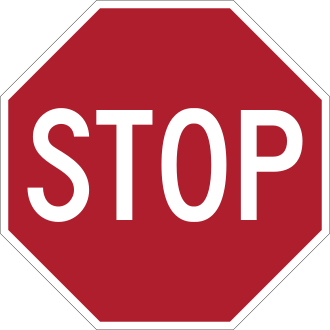
- Slow to the posted advisory speed and proceed with caution
- Slow down and yield to cross traffic if the way is clear
- Stop only if pedestrians or vehicles are present
- Come to a complete stop and proceed only when the way is clear
Answer: D — Come to a complete stop and proceed only when the way is clear
An octagon sign always means a complete stop at the stop line, crosswalk, or curb before proceeding.
8. What must you do when you see this sign?
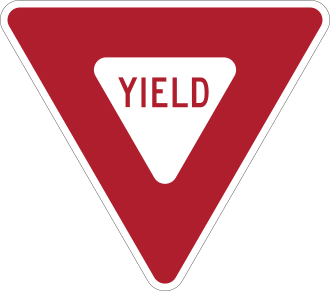
- Stop only if a vehicle is already in the intersection
- Come to a complete stop even if the way is clear
- Slow down and be ready to stop, letting crossing traffic, pedestrians and bicyclists go first
- Maintain your speed since you have the right of way
Answer: C — Slow down and be ready to stop, letting crossing traffic, pedestrians and bicyclists go first
A triangular yield sign means slow down, be ready to stop, and let others pass before proceeding.
9. You reach an intersection posted with this plaque at the same moment as another vehicle on the cross street. What determines who goes first?
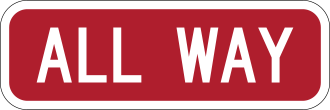
- The vehicle traveling straight always goes before one that is turning
- Whichever driver arrived first goes first, regardless of position
- The larger vehicle has the right of way
- Every vehicle must stop, and the driver on the right goes first
Answer: D — Every vehicle must stop, and the driver on the right goes first
At an all-way stop, every driver stops, and among vehicles arriving together, the one on the right goes first.
10. What does this sign tell you?
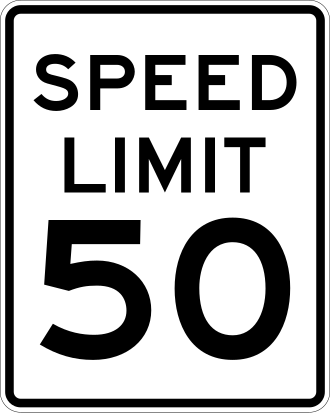
- The speed at which cameras begin issuing tickets automatically
- The maximum legal speed allowed in good weather conditions
- The minimum speed allowed on the road
- The safe speed for an upcoming curve or exit
Answer: B — The maximum legal speed allowed in good weather conditions
A posted speed limit is the maximum legal speed under good conditions, not a safety guarantee in poor conditions.
11. What does this sign prohibit?
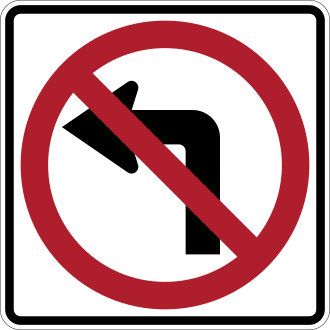
- Right turns only
- Left turns, and also U-turns since they count as two left turns
- Passing other vehicles
- U-turns only
Answer: B — Left turns, and also U-turns since they count as two left turns
Where left turns are banned, U-turns are also banned because a U-turn legally counts as two left turns.
12. What must you do when you see this sign?
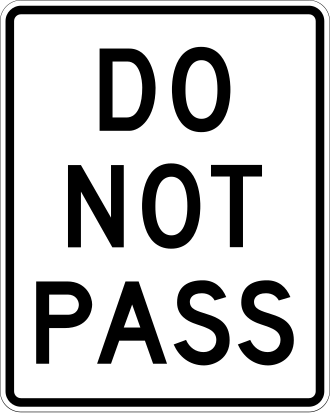
- Prepare to stop because a traffic signal is ahead
- Not pass other vehicles, even if the road ahead looks clear
- Not enter the roadway in this direction
- Slow down because a lane is about to end ahead
Answer: B — Not pass other vehicles, even if the road ahead looks clear
This sign marks the start of a no-passing zone, and passing is prohibited even when the road looks clear.
13. What must you do when you see this sign?
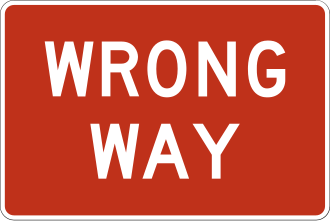
- Slow down, pull over, and turn around carefully because you are headed into oncoming traffic
- Continue driving carefully; it only warns of a one-way street ahead
- Proceed with caution, watching for vehicles entering from the right
- Merge into the next lane immediately
Answer: A — Slow down, pull over, and turn around carefully because you are headed into oncoming traffic
This sign means you are driving against traffic, and you must slow, pull over, and turn around carefully.
14. What does this sign tell you about the road ahead?
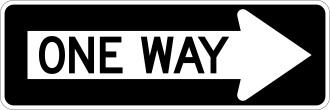
- Traffic flows only in the direction the arrow shows
- You may not drive on this roadway at all
- This roadway is reserved for buses only
- Two-way traffic begins ahead
Answer: A — Traffic flows only in the direction the arrow shows
This sign marks a street where all traffic must travel in the single direction the arrow points.
15. What must you do at a red light when you see this sign?
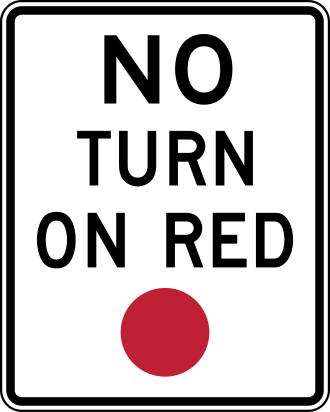
- Treat the light as a flashing red and proceed when clear
- Turn right after a complete stop if the way is clear
- Wait for a green light before turning
- Turn left only if you're on a one-way street
Answer: C — Wait for a green light before turning
This sign overrides the usual right-on-red allowance, so you must wait for green before turning.
16. What must you do when you see this sign at a railroad crossing?
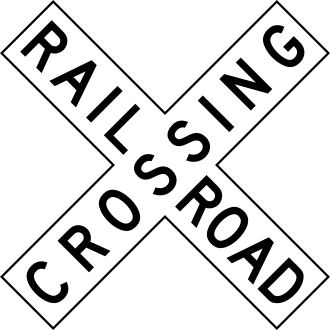
- Stop only if the crossing has flashing lights or gates
- Look, listen, slow down and be ready to stop, since a train may come from either direction on any track
- Proceed at normal speed unless you see a train
- Sound your horn and proceed if no gates are present
Answer: B — Look, listen, slow down and be ready to stop, since a train may come from either direction on any track
The crossbuck marks the crossing itself, where a train could be on any track from either direction.
17. What should you expect when you see this sign?
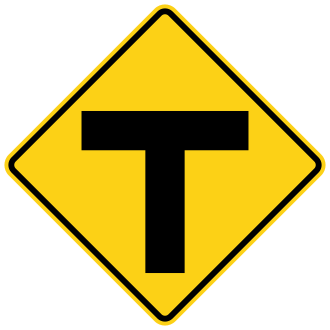
- The road ends ahead at a stop sign, requiring a turn after yielding
- The road curves sharply right or left ahead
- A side road joins from the right ahead
- You must bear right or left as the road splits
Answer: A — The road ends ahead at a stop sign, requiring a turn after yielding
This sign warns that the road terminates ahead at a stop sign, where you must yield and turn.
18. What must you do when you see this sign?
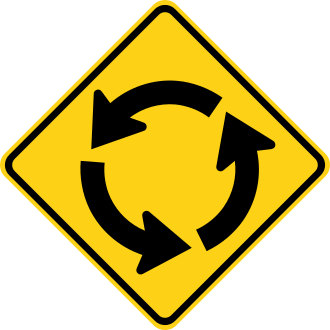
- Merge left because the lane ends ahead
- Yield to traffic already circulating and travel counterclockwise
- Prepare for a sharp turn in the direction shown
- Stop completely before entering, regardless of other traffic
Answer: B — Yield to traffic already circulating and travel counterclockwise
At a roundabout, entering traffic yields to vehicles already circulating and travels counterclockwise.
19. What should you do when you see this sign?
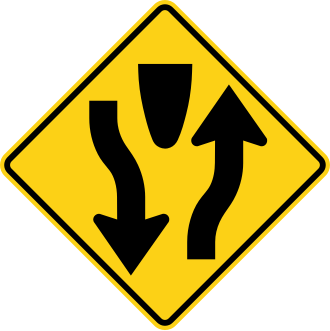
- Prepare for two-way traffic to begin
- Merge left because your lane is ending
- Keep right as the road splits into two one-way roadways separated by a median
- Slow down for a narrow bridge ahead
Answer: C — Keep right as the road splits into two one-way roadways separated by a median
This sign warns that the highway is dividing into separate one-way roadways, and drivers should keep right.
20. What should you do when you see this sign in wet weather?
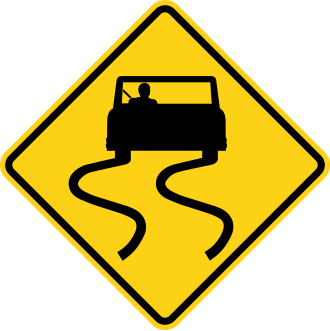
- Stay centered in the lane and avoid the shoulder
- Watch for a steep grade requiring brake checks
- Reduce speed and avoid hard braking or sudden direction changes
- Keep your normal speed but increase your following distance
Answer: C — Reduce speed and avoid hard braking or sudden direction changes
On slippery pavement, sudden braking or steering can cause a skid, so speed should be reduced and movements kept smooth.
21. What should you do when you see this sign?
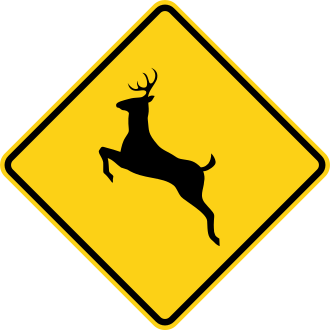
- Watch for pedestrians entering a crosswalk
- Watch for bicyclists riding beside traffic
- Slow down for livestock-drawn vehicles ahead
- Slow down, stay alert, and be ready to stop for animals crossing
Answer: D — Slow down, stay alert, and be ready to stop for animals crossing
This sign warns of deer crossing the roadway, so drivers should slow, stay alert, and be ready to stop.
22. What should you do when you see this sign?
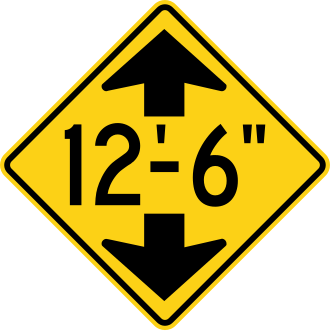
- Reduce speed because the road surface is rough ahead
- Not proceed if your vehicle is wider than the lane shown
- Not proceed if your vehicle is taller than the height shown
- Watch for a low hump that may catch low vehicles
Answer: C — Not proceed if your vehicle is taller than the height shown
A low-clearance sign posts a maximum height, and taller vehicles must not proceed under it.
23. What should you do when you see this sign?
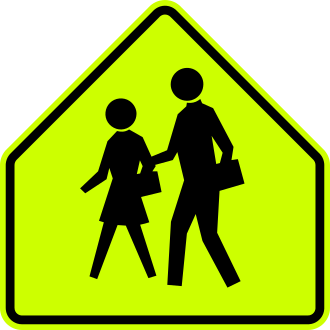
- Watch for children and obey any crossing guards, since this marks a school zone or crossing
- Slow to the school-zone limit only while lights are flashing
- Prepare to stop for a signal ahead
- Watch for a side road entering from the right
Answer: A — Watch for children and obey any crossing guards, since this marks a school zone or crossing
The pentagon shape marks a school zone or crossing, where drivers must watch for children and follow crossing guards.
24. Your car stalls on railroad tracks and you see a train approaching.
- Get out immediately and run diagonally away from the tracks toward the oncoming train
- Try to restart the car for a few seconds before exiting
- Stay in the car and call the emergency number posted at the crossing
- Get out immediately and run straight away from the tracks in the direction the car was heading
Answer: A — Get out immediately and run diagonally away from the tracks toward the oncoming train
Running diagonally away and toward the oncoming train keeps you clear of flying debris if the train strikes the car.
25. You are ticketed for speeding while driving through an active highway work zone.
- The fine is the same as a hand-held device violation, capped at $100
- The fine can be up to $250
- The fine can be up to $500
- There is no separate fine; it is treated as an ordinary speeding ticket
Answer: C — The fine can be up to $500
Speeding in a work zone carries a fine of up to $500, higher than the ordinary hand-held device fine.
26. You are driving on a two-lane road separated by double solid yellow lines and come up behind a bicyclist riding in your lane.
- You may never cross the double solid yellow line for any reason
- You may cross only if you first activate your hazard lights
- You may cross only where a broken yellow line appears beside the solid line
- You may cross briefly to pass the bicyclist safely if the opposite lane is clear
Answer: D — You may cross briefly to pass the bicyclist safely if the opposite lane is clear
Double solid yellow lines forbid passing except to turn left or to safely pass a bicyclist or other vulnerable road user.
27. What does the manual say about HOV lanes that are separated from the ordinary lanes by barriers?
- They are marked with a red X in the center of the lane
- They are reversible
- They are open to all vehicles during heavy traffic
- They may not be used by motorcycles
Answer: B — They are reversible
Barrier-separated HOV lanes are reversible. During heavy traffic HOV lanes are reserved for buses, vanpools, carpools, motorcycles and certain clean-fuel vehicles, and they are marked by a diamond in the lane center.
28. What does this sign tell you about the lane you're in?
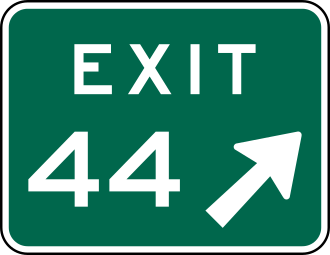
- This lane is reserved for buses and carpools
- This lane leaves the highway at the upcoming exit
- This lane ends and you must merge left
- This lane merges with another lane ahead
Answer: B — This lane leaves the highway at the upcoming exit
An Exit Only sign marks a lane that does not continue on the highway but leads directly to the exit.
29. You accidentally drive into a high-speed E-ZPass lane without a transponder in your vehicle.
- Pull over immediately inside the toll plaza and wait for an attendant
- Continue through without stopping; a camera will bill the registered owner
- Stop immediately and back out of the lane
- Switch lanes immediately within the plaza to find a cash lane
Answer: B — Continue through without stopping; a camera will bill the registered owner
Stopping in a high-speed toll lane is dangerous, so you should keep going and let the camera system bill the vehicle's owner.
30. You pull up to a curb painted solid red to wait while a passenger runs into a store.
- It's allowed as long as you stay with the vehicle
- Stopping, standing, or parking there is not allowed at all
- It's allowed only to pick up or drop off passengers, not to wait
- It's allowed only to load or unload quickly
Answer: B — Stopping, standing, or parking there is not allowed at all
A red curb prohibits any stopping, standing, or parking, unlike white or yellow curbs which allow limited stops.
Take this test interactively
More Virginia Driver License practice tests