Indiana Driver License: Signs and Signals
29 questions with the correct answer and an explanation for each.
Topic: Signs and Signals. Free, no account needed.
Take this test interactively
1. Which color on a traffic sign signals a regulation demanding immediate action from the driver?
- Red
- Orange
- Yellow
- Blue
Answer: A — Red
Red is reserved for regulations requiring immediate compliance, such as Wrong Way.
2. A driver approaching a temporary work zone should expect to see signs in which color?
- Yellow
- Brown
- Orange
- Green
Answer: C — Orange
Orange marks temporary conditions such as construction.
3. Which color is used to give extra visibility to school zones, pedestrian areas, and bicycle routes?
- White
- Brown
- Fluorescent yellow-green
- Blue
Answer: C — Fluorescent yellow-green
The fluorescent yellow-green shade specifically marks schools, pedestrians, bicycles, playgrounds and school bus routes.
4. What does an equilateral triangle-shaped sign tell a driver to do?
- Merge left immediately
- Slow down at the intersection and be ready to stop and yield
- Come to a complete stop
- Reduce speed for wet pavement
Answer: B — Slow down at the intersection and be ready to stop and yield
Equilateral triangles warn drivers to slow at an intersection and be ready to stop and yield.
5. A pennant-shaped sign posted on the left side of a two-way road tells a driver what?
- Yield to oncoming traffic before merging
- Passing on the left is forbidden here
- A speed limit change is ahead
- A school zone is ahead
Answer: B — Passing on the left is forbidden here
Pennants on the left side of two-way roads mark the start of a no-passing zone.
6. A slow tractor displays an emblem with a fluorescent orange center and red reflective borders on its rear. What does this indicate?
- The vehicle must stop at every intersection
- The vehicle cannot exceed 45 mph
- The vehicle cannot exceed 25 mph
- The vehicle is exempt from yielding to traffic
Answer: C — The vehicle cannot exceed 25 mph
The slow-moving vehicle emblem marks a vehicle that cannot exceed 25 mph.
7. At a green light without an arrow, several drivers want to turn left as oncoming traffic clears. How should they proceed?
- Left turns are not permitted without an arrow
- Only one vehicle at a time may enter the intersection to complete the turn
- All waiting vehicles may turn together once the road looks clear
- They must wait for a green arrow before turning at all
Answer: B — Only one vehicle at a time may enter the intersection to complete the turn
A green light without an arrow allows a left turn after yielding, but only one vehicle at a time moves into the intersection to turn left.
8. A driver faces a flashing yellow arrow and wants to turn left. What must they do first?
- Stop completely and wait for a green light
- Wait for the arrow to turn steady yellow
- Yield to pedestrians and oncoming traffic, then turn
- Proceed immediately since the turn is protected
Answer: C — Yield to pedestrians and oncoming traffic, then turn
A flashing yellow arrow allows the turn only after yielding to pedestrians and oncoming traffic.
9. Before turning right on red where it is permitted, what must a driver do?
- Come to a full stop and check for vehicles and pedestrians in or approaching the path
- Slow down but need not stop if the road looks clear
- Sound the horn before proceeding into the turn
- Check only for pedestrians, since vehicles must yield to them
Answer: A — Come to a full stop and check for vehicles and pedestrians in or approaching the path
A right turn on red requires a full stop and a check for vehicles and pedestrians in or approaching the path, among other conditions.
10. Two vehicles reach an intersection with flashing red lights on all approaches at the same moment. Which one must yield?
- Whichever vehicle is going straight
- The vehicle on the right
- The vehicle on the left
- The larger vehicle
Answer: C — The vehicle on the left
When two vehicles arrive together at a flashing-red intersection, the vehicle on the left yields.
11. At a mid-block pedestrian hybrid beacon, the lights switch to alternating flashing red. What may a driver do?
- Continue waiting until the beacon goes dark
- Treat it as a steady red and never proceed
- Proceed if the crossing is clear
- Proceed only if a pedestrian waves them through
Answer: C — Proceed if the crossing is clear
During the alternating flashing red phase, drivers may proceed once the crossing is clear.
12. What must a driver do upon seeing this sign?
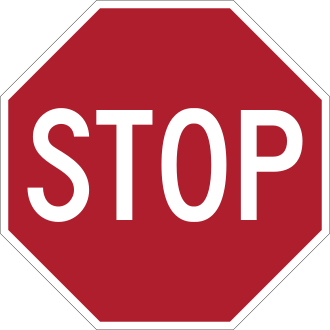
- Slow to the posted advisory speed
- Stop only if the intersection is busy
- Slow down and yield only if another vehicle is present
- Come to a complete stop and wait for vehicles and pedestrians before proceeding
Answer: D — Come to a complete stop and wait for vehicles and pedestrians before proceeding
This octagon sign requires a complete stop at the sign, stop line or crosswalk and waiting for vehicles and pedestrians.
13. What does this sign require a driver to do?
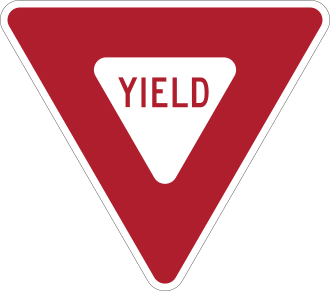
- Slow down and be ready to stop, letting vehicles, pedestrians and bicyclists pass
- Come to a complete stop every time
- Merge left immediately
- Maintain speed since it only applies to cross traffic
Answer: A — Slow down and be ready to stop, letting vehicles, pedestrians and bicyclists pass
This triangular sign means slow down and be ready to stop, letting others with the right-of-way pass.
14. This plaque is posted beneath a stop sign. What does it tell drivers?
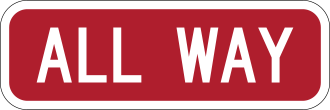
- The intersection is a roundabout
- Right turn on red is not allowed here
- Only cross traffic must stop
- Every road at the intersection has a stop sign, and drivers arriving together yield to the one on the right
Answer: D — Every road at the intersection has a stop sign, and drivers arriving together yield to the one on the right
This plaque marks an all-way stop where drivers arriving together yield to the driver on the right.
15. What does this sign indicate?
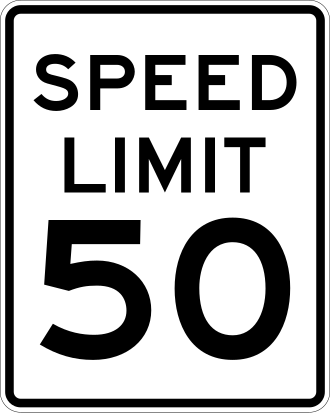
- The maximum legal speed in good conditions
- The minimum speed required on the roadway
- The speed limit that applies only during school hours
- A recommended safe speed for a curve ahead
Answer: A — The maximum legal speed in good conditions
This sign posts the maximum legal speed in good weather; driving too fast for conditions can still be ticketed.
16. What is prohibited at this sign?
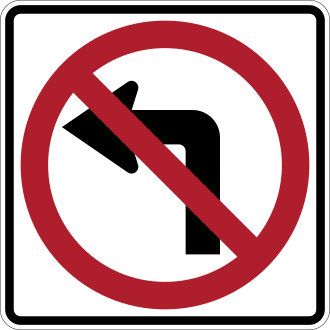
- Right turns only
- Left turns, and U-turns since they count as two left turns
- Passing on the left
- Entering the roadway in this direction
Answer: B — Left turns, and U-turns since they count as two left turns
This sign bans left turns and, since a U-turn counts as two left turns, U-turns as well.
17. What maneuver does this sign prohibit?
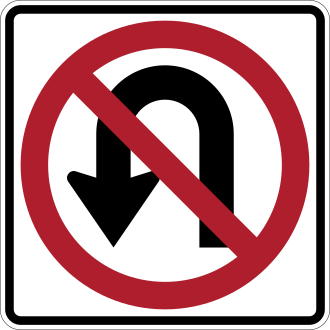
- Parking along the curb
- Turning left at the intersection
- Turning right at the intersection
- A U-turn, which counts as two left turns
Answer: D — A U-turn, which counts as two left turns
This sign bans U-turns; the document elsewhere describes a U-turn as counting as two left turns.
18. What does this sign mark?
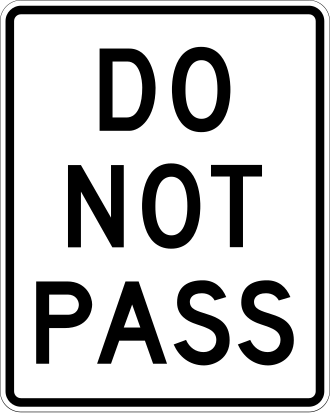
- The end of a no-passing zone
- A merging lane ahead
- The start of a zone where passing is illegal, even with a clear road
- A zone where slower traffic must keep right
Answer: C — The start of a zone where passing is illegal, even with a clear road
This sign marks the start of a no-passing zone; passing is prohibited even if the road looks clear.
19. What does this sign mean?
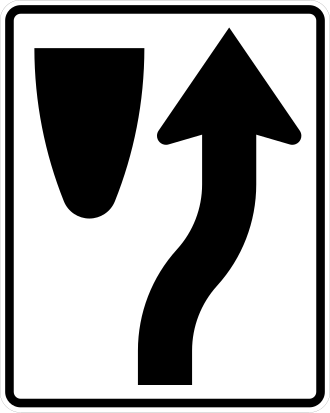
- A traffic island, median or barrier is ahead; keep to the side shown
- The road narrows on the right side
- Slower traffic must use the right lane for through travel
- Trucks must use the right lane only
Answer: A — A traffic island, median or barrier is ahead; keep to the side shown
This sign warns of an obstruction ahead, such as a median or island, and directs drivers to the side shown.
20. What does this sign tell a driver?
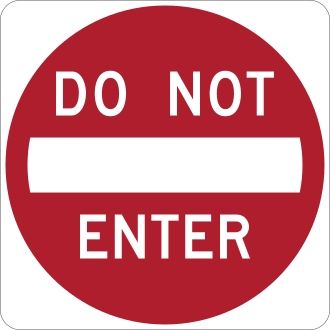
- Driving in this direction on this roadway is prohibited
- Trucks may not enter this road
- Only one direction of travel is allowed on this shared road
- You are already traveling against the flow of traffic
Answer: A — Driving in this direction on this roadway is prohibited
This sign marks an entrance that is closed to traffic in that direction.
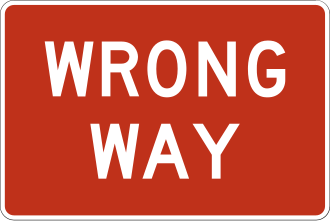
21. What should a driver do upon seeing this sign?
- Turn right immediately without stopping
- Continue on, since it only applies to trucks
- Recognize they are going the wrong way, slow down, pull over and carefully turn around
- Proceed with caution, since it only marks a merge point
Answer: C — Recognize they are going the wrong way, slow down, pull over and carefully turn around
This sign warns a driver they are going the wrong way and should slow down, pull over, and turn around carefully.
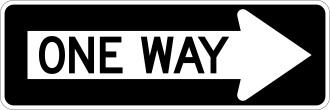
22. What does this sign indicate about the road ahead?
- A divided highway begins ahead
- Traffic moves only in the direction the arrow shows
- The road is closed in that direction
- Two-way traffic resumes ahead
Answer: B — Traffic moves only in the direction the arrow shows
This sign shows the roadway is one-way, with traffic flowing only in the direction of the arrow.
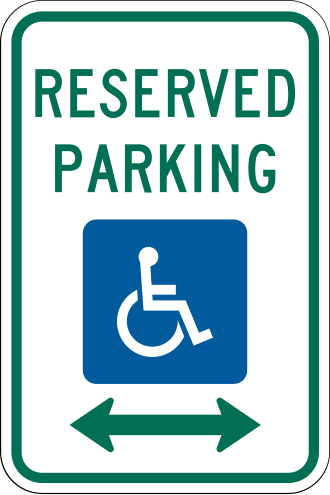
23. Who may park in a space marked with this sign?
- Emergency vehicles only
- Any vehicle for up to two hours
- Only holders of a disabled parking permit
- Delivery vehicles during business hours
Answer: C — Only holders of a disabled parking permit
This sign reserves parking for disabled parking permit holders.
24. What must a driver do at this sign?
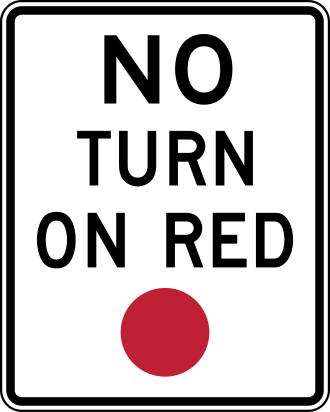
- Stop, then turn right on red if the way is clear
- Turn left on red, but only from a one-way street
- Yield to pedestrians, then turn right on red
- Wait for a green light before turning; turning on red is not allowed
Answer: D — Wait for a green light before turning; turning on red is not allowed
This sign prohibits turning on red, so the driver must wait for a green light.
25. What should a driver do upon seeing this sign?
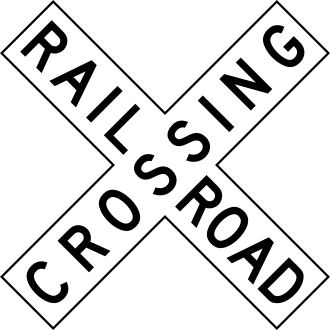
- Yield only if a train is visibly approaching
- Proceed at normal speed, since gates will lower if needed
- Look, listen, slow down and be ready to stop for a train from either direction
- Sound the horn and cross quickly
Answer: C — Look, listen, slow down and be ready to stop for a train from either direction
This crossbuck marks a railroad crossing, requiring the driver to look, listen, slow down and be ready to stop for trains from either direction.
26. What does this sign warn a driver to prepare for?
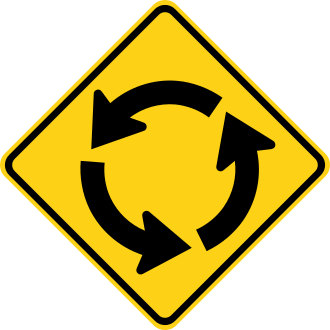
- A roundabout ahead, where they must yield to traffic in the circle and travel counterclockwise
- A divided highway beginning ahead
- A Y intersection requiring a choice of direction
- A four-way stop ahead
Answer: A — A roundabout ahead, where they must yield to traffic in the circle and travel counterclockwise
This sign warns of a roundabout, where drivers must yield to traffic already circulating and go counterclockwise.
27. What should a driver do upon seeing this sign?
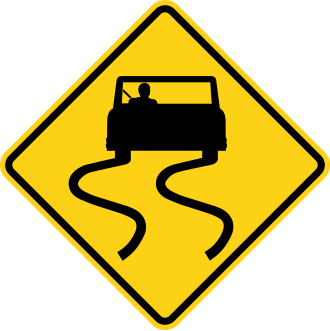
- Stop completely whenever the road is wet
- Increase following distance only in winter weather
- Reduce speed on wet pavement and avoid hard braking or sudden turns
- Turn on headlights regardless of the weather
Answer: C — Reduce speed on wet pavement and avoid hard braking or sudden turns
This sign warns that pavement is slippery when wet, calling for reduced speed and no hard braking or sudden turns.
28. What does this sign warn of?
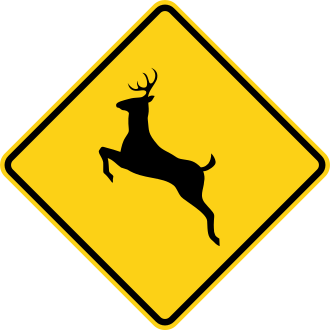
- A pedestrian crossing area
- Farm animals crossing the road
- Deer may cross the road; slow down, stay alert and be ready to stop
- A wildlife refuge with a reduced speed limit at all times
Answer: C — Deer may cross the road; slow down, stay alert and be ready to stop
This sign warns of deer crossing, calling for reduced speed and alertness.
29. What does this sign indicate?
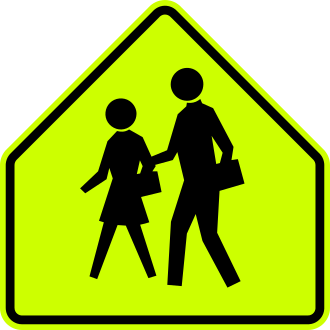
- A school zone or crossing; watch for children and obey crossing guards
- A playground with a reduced speed limit at all times
- The school speed limit is in effect only when lights flash
- A school bus stop ahead where traffic must stop
Answer: A — A school zone or crossing; watch for children and obey crossing guards
This pentagon marks a school zone or crossing, requiring drivers to watch for children and obey crossing guards.
Take this test interactively
More Indiana Driver License practice tests
- Indiana Driver License: Accidents, Emergencies and Traffic Stops — 29 questions
- Indiana Driver License: Credentials, Permits, Probationary Rules and Endorsements — 30 questions
- Indiana Driver License: Lanes, Passing, Turning, Speed Limits and Conditions — 30 questions
- Indiana Driver License: Points, Insurance, Suspensions and OWI — 28 questions
- Indiana Driver License: Work Zones, Railroads, Sharing the Road, Parking and Belts — 30 questions