Louisiana Driver License: Signs, Signals and Pavement Markings
30 questions with the correct answer and an explanation for each.
Topic: Signs, Signals and Pavement Markings. Free, no account needed.
Take this test interactively
1. Which age group has traffic crashes as their leading cause of death?
- Ages 65 and older
- Ages 35 to 44
- Ages 25 to 34
- Ages 15 to 24
Answer: D — Ages 15 to 24
Crashes are stated to be the leading cause of death specifically for ages 15 to 24.
2. Which of the following is one of Louisiana's four leading causes of traffic fatalities?
- Distraction
- Poor road markings
- Heavy rainfall
- Vehicle age
Answer: A — Distraction
The four leading causes listed are alcohol, distraction, aggressive driving and lack of seat belt use.
3. A driver notices an interstate route is numbered with an even number. What does that indicate about its direction of travel?
- It runs east-west
- It runs north-south
- It circles a city
- It is a business loop
Answer: A — It runs east-west
Even-numbered interstates run east-west, while odd-numbered ones run north-south.
4. What does a sideways pennant-shaped sign along the road indicate?
- A railroad crossing ahead
- A no-passing zone
- A school zone
- A construction zone
Answer: B — A no-passing zone
The sideways pennant shape is used specifically for no-passing zones.
5. What does a fluorescent pink sign along a highway indicate?
- A recreational or cultural site
- A school zone
- Incident management, such as a crash or hurricane closure
- A construction work zone
Answer: C — Incident management, such as a crash or hurricane closure
Fluorescent pink is reserved for incident management signage like hurricane or crash closures.
6. Which of the following warns drivers of an upcoming road hazard rather than stating a legal rule they must follow?
- One-Way
- No U-Turn
- Winding Road
- Do Not Enter
Answer: C — Winding Road
Winding Road is a warning sign about upcoming curves, while the others are regulatory signs establishing a legal requirement.
7. A driver enters a center lane marked for left turns from either direction. How far may they travel in it before completing the turn?
- No more than 100 feet
- No more than 500 feet
- There is no distance limit
- No more than 200 feet
Answer: D — No more than 200 feet
The shared center lane may not be driven in for more than 200 feet.
8. A driver approaches a roadside incident, such as a crash being cleared by emergency crews. What does Louisiana's Move Over law require?
- Stop completely until the scene is cleared
- Only slow down if the incident is on the driver's own lane
- Slow down and change lanes away from the incident
- Flash headlights and proceed at normal speed
Answer: C — Slow down and change lanes away from the incident
The Move Over law requires slowing and changing lanes at a roadside incident.
9. A driver is caught speeding in a marked highway construction zone. What happens to the fine compared to a normal zone?
- It is tripled
- It is doubled
- It stays the same
- It is waived for a first offense
Answer: B — It is doubled
Fines are stated to be double in construction zones.
10. A traffic signal turns steady yellow as a driver approaches, with enough room to stop safely. What should the driver do?
- Treat it the same as a flashing yellow and proceed with caution
- Stop immediately regardless of position in the intersection
- Slow and stop before the stop bar
- Speed up to clear the intersection before it turns red
Answer: C — Slow and stop before the stop bar
Steady yellow means the signal is about to turn red, so the driver should slow and stop before the stop bar if able.
11. What must a driver do at an intersection controlled by a flashing red signal?
- Slow down but stop only if other traffic is present
- Stop as at a stop sign, look both ways and yield
- Wait for the light to turn green before proceeding
- Treat it the same as a yield sign
Answer: B — Stop as at a stop sign, look both ways and yield
A flashing red signal requires stopping as at a stop sign, looking both ways and yielding.
12. Approaching a roundabout, to what speed should a driver slow before entering?
- 15 mph or less
- 25 mph or less
- 35 mph or less
- There is no set advisory speed
Answer: A — 15 mph or less
Drivers are told to slow to 15 mph or less when approaching a roundabout.
13. What must a driver do at this sign?
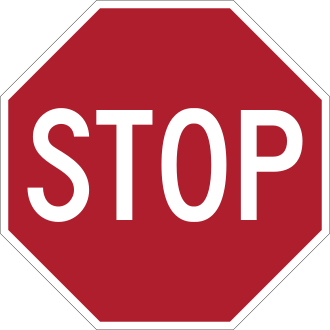
- Slow down and proceed if no traffic is crossing
- Stop only if other vehicles are present
- Slow to the posted advisory speed
- Come to a complete stop at the sign, stop line or crosswalk
Answer: D — Come to a complete stop at the sign, stop line or crosswalk
This octagon sign requires a complete stop at the stop line or crosswalk before proceeding.
14. What must a driver do on seeing this sign?
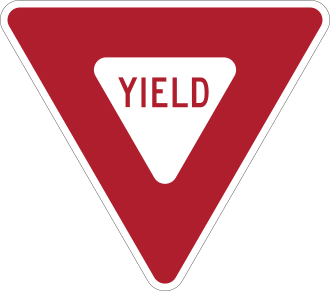
- Slow down and let crossing traffic pass before proceeding
- Stop completely and wait for a gap in traffic
- Maintain speed since they have the right-of-way
- Merge immediately into the nearest open lane
Answer: A — Slow down and let crossing traffic pass before proceeding
This downward triangle sign means slow and let traffic with the right-of-way cross first.
15. A driver reaches a stop sign posted with this plaque underneath, arriving at the intersection at the same time as another vehicle. What should they do?
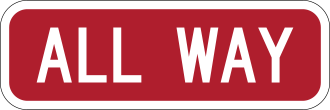
- Stop only if a vehicle is already stopped ahead
- Proceed first since they arrived from the left
- Assume only cross traffic must stop
- Stop, then yield to the driver on the right
Answer: D — Stop, then yield to the driver on the right
This plaque means every approach must stop, and drivers arriving together yield to the driver on the right.
16. What does the number posted on this sign represent?
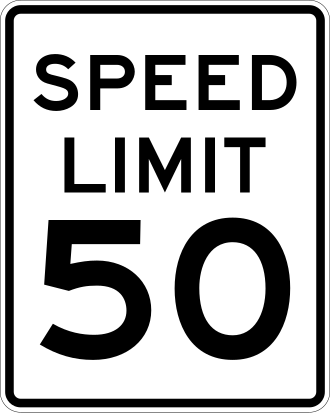
- The recommended speed for curves only
- The maximum legal speed allowed under good driving conditions
- The average speed of surrounding traffic
- The minimum speed required at all times
Answer: B — The maximum legal speed allowed under good driving conditions
Speed Limit signs give the maximum speed, to be driven only in ideal conditions.
17. What does this sign prohibit?
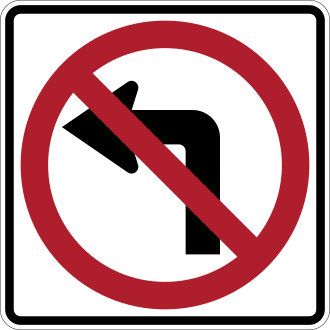
- Left turns and U-turns at this location
- Left turns during rush hour only
- Left turns from the far lane only
- Only U-turns, while left turns remain allowed
Answer: A — Left turns and U-turns at this location
This sign prohibits left turns, and U-turns are also illegal since they count as two left turns.
18. What is the center lane marked with this sign reserved for?
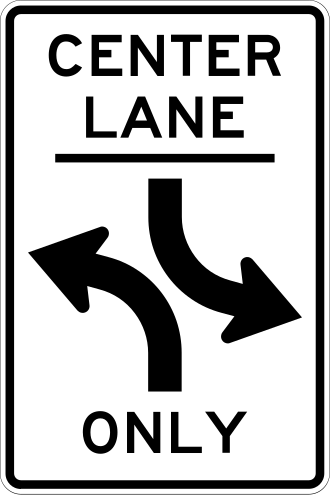
- Right turns and merging traffic
- Through traffic only during rush hour
- Passing slower vehicles
- Left turns from either direction of travel, for no more than 200 feet
Answer: D — Left turns from either direction of travel, for no more than 200 feet
The center lane is reserved for left turns from either direction, never through traffic or passing, for no more than 200 feet.
19. What does this sign mean?
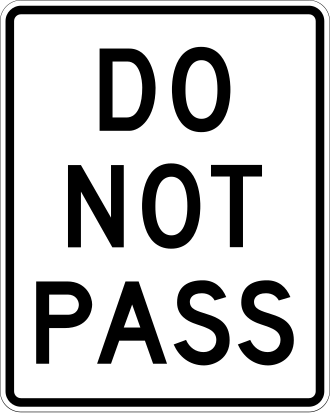
- The start of a zone where passing is not allowed, even if the road looks clear
- A reminder to check mirrors before merging
- The end of a no-passing zone
- A zone where speed must be reduced for a curve
Answer: A — The start of a zone where passing is not allowed, even if the road looks clear
Do Not Pass marks the start of a no-passing zone based on sight distance and hidden hazards.
20. What does this sign tell a driver to do?
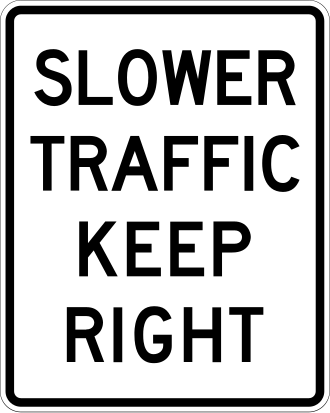
- Slower drivers should use the right lane
- Trucks must use the right lane exclusively
- The right lane is closed ahead
- All traffic must stay in the right lane at all times
Answer: A — Slower drivers should use the right lane
Slower Traffic Keep Right tells slow drivers to use the right lane on multilane highways.
21. What does this sign mean?
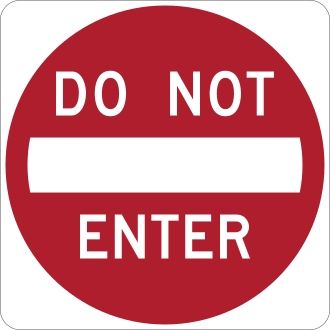
- Entering the roadway in this direction is prohibited
- Parking is prohibited in this area
- The road ahead is closed for construction
- This is a one-way street open to entry
Answer: A — Entering the roadway in this direction is prohibited
This white bar in a red circle guards against entering wrong-way ramps, crossovers and one-way streets.
22. A driver sees this sign after turning. What should they do?
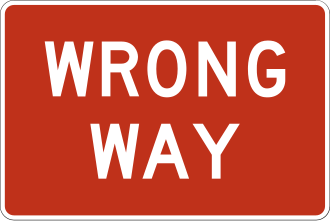
- Follow the posted detour
- Proceed since the road ahead reverses direction
- Slow down, pull over and turn around carefully
- Continue to the next exit to correct course
Answer: C — Slow down, pull over and turn around carefully
This sign appears when a driver has turned the wrong way into a one-way street or ramp, requiring them to slow, pull over and turn around.
23. Who is parking reserved for at this sign?
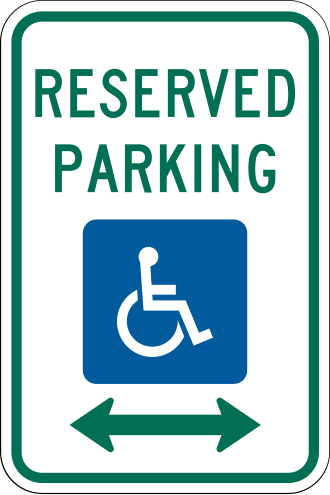
- Anyone with a paid permit
- Holders of a disability parking permit
- Loading and unloading only
- Emergency vehicles only
Answer: B — Holders of a disability parking permit
This sign, shown in light blue, reserves parking for disability permit holders.
24. What must a driver do on seeing this sign?
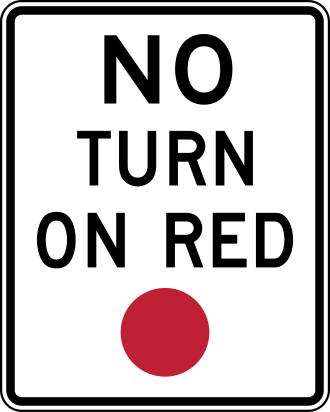
- Wait for a green signal; turning on red is not allowed
- Turn right on red after stopping and checking traffic
- Stop even when the light is green
- Turn left on red from a one-way street
Answer: A — Wait for a green signal; turning on red is not allowed
No Turn on Red means the driver must wait for green rather than turning on the red signal.
25. What must a driver do on seeing this sign?
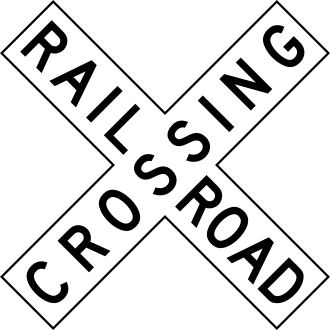
- Look, listen, slow down and be ready to stop for trains from either direction
- Check vehicle height before proceeding
- Watch for bicycles crossing the road
- Prepare to enter a one-way street
Answer: A — Look, listen, slow down and be ready to stop for trains from either direction
The crossbuck stands at every public railroad crossing and requires yielding to trains.
26. What should a driver do on seeing this sign ahead?
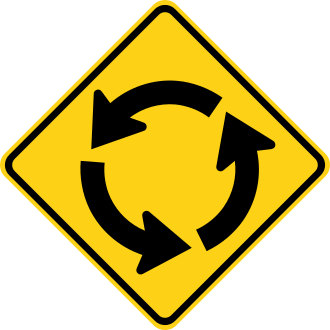
- Prepare to merge onto a divided highway
- Prepare for a four-way stop ahead
- Prepare to make a U-turn at the next opening
- Prepare to enter a roundabout and yield to traffic already circulating
Answer: D — Prepare to enter a roundabout and yield to traffic already circulating
This sign warns of a roundabout ahead, where traffic must yield to vehicles already circulating.
27. What does this sign warn a driver to do?
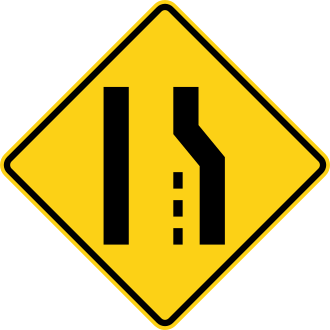
- The road narrows in both directions
- An additional lane is being added on the right
- The right lane ends ahead and drivers in it must merge left
- Two lanes merge into one from both directions equally
Answer: C — The right lane ends ahead and drivers in it must merge left
This sign warns that the right lane ends and drivers in it must merge left when space opens.
28. What should a driver do on seeing this sign?
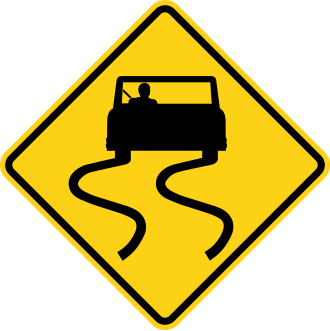
- Avoid the road entirely during rain
- Expect ice before the rest of the road freezes
- Reduce speed only when snow is present
- Reduce speed on wet pavement and avoid hard braking or sudden turns
Answer: D — Reduce speed on wet pavement and avoid hard braking or sudden turns
This sign warns to reduce speed on wet pavement and avoid hard braking or sudden turns.
29. What should a driver do on seeing this sign?
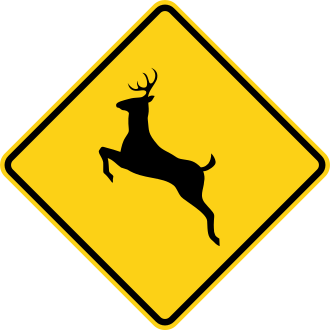
- Expect livestock fencing ahead
- Expect a wildlife refuge entrance
- Expect hunting activity in the area
- Slow down, be alert and be ready to stop for animals crossing
Answer: D — Slow down, be alert and be ready to stop for animals crossing
This sign warns that deer cross here, so drivers should slow down, be alert and be ready to stop.
30. What should a driver do on seeing this sign?
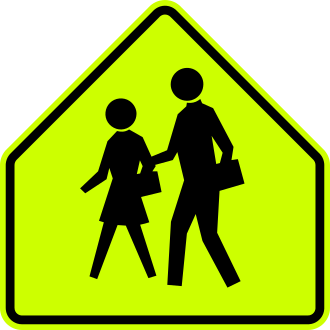
- Slow down only if a crossing guard is visible
- Proceed at normal speed unless lights are flashing
- Expect a bus stop rather than a school zone
- Watch for children and obey any crossing guards in the area
Answer: D — Watch for children and obey any crossing guards in the area
This sign marks a school zone or crossing, requiring drivers to watch for children and obey crossing guards.
Take this test interactively
More Louisiana Driver License practice tests
- Louisiana Driver License: Alcohol, DWI, Implied Consent, Trailers and Registration — 30 questions
- Louisiana Driver License: Belts, Child Seats, Air Bags, Steering and the Seasons — 30 questions
- Louisiana Driver License: Defensive Driving, Fatigue, Scanning and Following Distance — 36 questions
- Louisiana Driver License: Distraction, Avoiding Collisions, Emergencies and Crashes — 30 questions
- Louisiana Driver License: Getting a License, the GDL, Tests and Renewal — 30 questions
- Louisiana Driver License: Interstates, Rural Roads, Animals and Trip Planning — 27 questions
- Louisiana Driver License: Parking, Passing, Night, Pedestrians and Sharing the Road — 30 questions
- Louisiana Driver License: Traffic Laws, School Buses, Turns, Right-of-Way and Railroads — 30 questions