Oklahoma Driver License: Signs, Signals and Markings
30 questions with the correct answer and an explanation for each.
Topic: Signs, Signals and Markings. Free, no account needed.
Take this test interactively
1. What must you do when you see this sign?
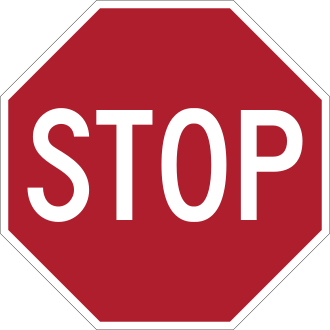
- Stop only if pedestrians are present
- Stop completely and wait until the way is clear in all directions
- Reduce speed to the posted limit
- Slow down and yield to crossing traffic
Answer: B — Stop completely and wait until the way is clear in all directions
A red octagon requires a full stop, staying stopped until the intersection is clear in every direction.
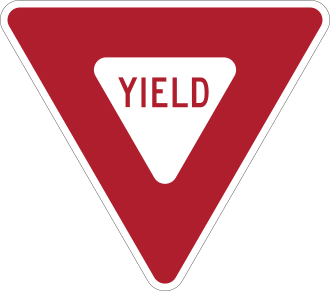
2. What does this sign require of a driver?
- Merge into the right lane immediately
- Slow down, be ready to stop, and let oncoming vehicles pass before entering the flow
- Stop only when a train is approaching
- Come to a complete stop before proceeding
Answer: B — Slow down, be ready to stop, and let oncoming vehicles pass before entering the flow
A yield sign means slow down and be ready to stop, letting oncoming traffic pass before crossing or entering.
3. What does this sign mean when posted below a stop sign?
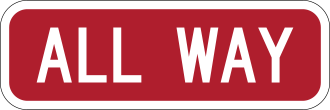
- Every approach to the intersection must stop
- Only cross traffic must stop
- The intersection has no right-of-way rules
- Traffic must merge before reaching the intersection
Answer: A — Every approach to the intersection must stop
A 4-Way or All-Way plaque under a stop sign means every approach to the intersection must stop.
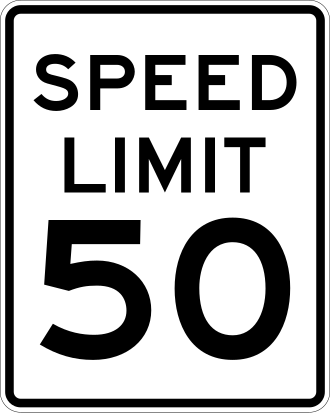
4. What does this sign indicate?
- The minimum speed required on the road
- The highest speed allowed under ideal conditions
- The speed at which fines are doubled
- The recommended speed for an upcoming curve
Answer: B — The highest speed allowed under ideal conditions
The speed limit sign states the highest speed permitted under ideal conditions, not a minimum or advisory speed.
5. What does this sign tell a driver?
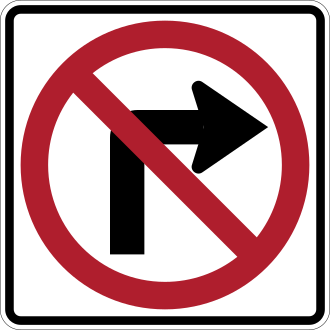
- Right turns are not allowed here
- The right lane is closed ahead
- Trucks may not turn right
- Right turns are allowed only on red
Answer: A — Right turns are not allowed here
This regulatory sign forbids right turns at the location where it is posted.
6. What is prohibited by this sign?
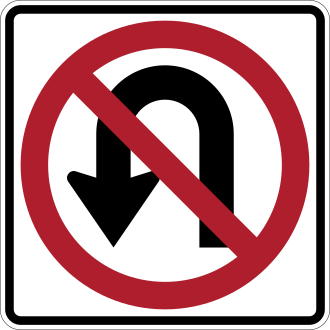
- Passing on the right
- Turning around in the street or intersection
- Entering the roadway from this direction
- Left turns
Answer: B — Turning around in the street or intersection
A No U-Turn sign forbids turning around in the street or intersection.
7. What is this lane reserved for?
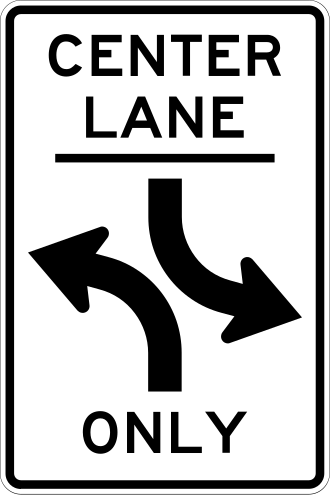
- Right turns only
- Entering only to make a left turn, and never for passing
- Passing slower traffic
- Through traffic in both directions
Answer: B — Entering only to make a left turn, and never for passing
The center lane may be entered only to make a left turn, and it must never be used to pass.
8. What does this sign mark?
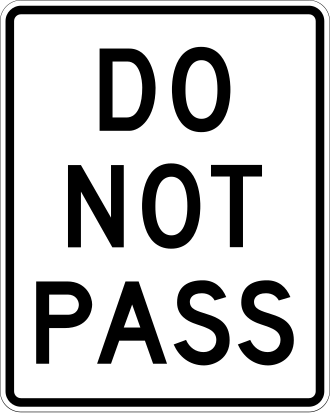
- A one-way street ahead
- A merge point where passing is allowed
- The start of a no-passing zone, even with a clear road ahead
- A school zone with reduced speed
Answer: C — The start of a no-passing zone, even with a clear road ahead
This sign forbids passing and crossing the yellow lines because sight distance ahead is inadequate.
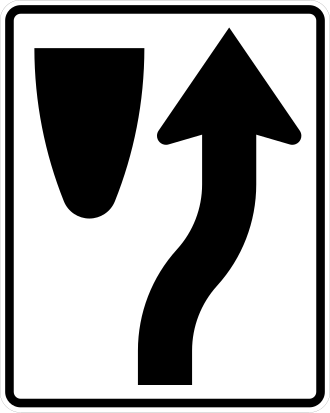
9. What does this sign warn of?
- A one-way roadway split
- A sharp curve requiring reduced speed
- A railroad crossing ahead
- A traffic island, median or barrier ahead; keep to the side shown
Answer: D — A traffic island, median or barrier ahead; keep to the side shown
Keep Right directs drivers to the correct side of an object or center divider ahead.
10. What does this sign mean?
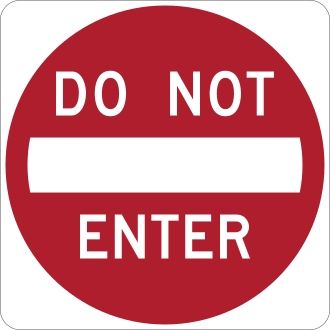
- You cannot drive in this direction because the road carries one-way traffic toward you
- Parking is prohibited ahead
- No trucks may use this road
- The road ends ahead
Answer: A — You cannot drive in this direction because the road carries one-way traffic toward you
Do Not Enter marks a road where traffic is one-way toward the driver.
11. What should a driver do on seeing this sign?
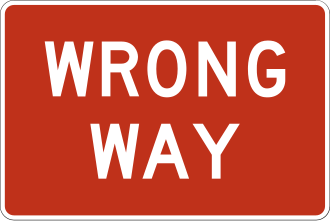
- Slow down, pull over and turn around carefully
- Stop and wait for oncoming traffic to pass
- Merge into the left lane immediately
- Continue at reduced speed
Answer: A — Slow down, pull over and turn around carefully
This sign warns a driver they are traveling against traffic and must safely reverse direction.
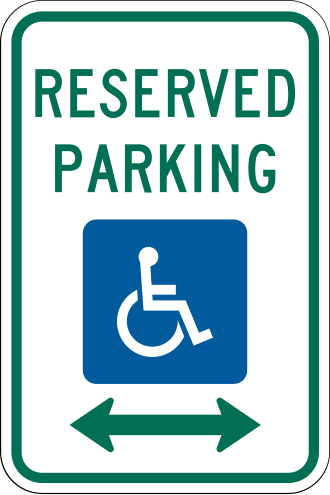
12. Who may use parking marked with this sign?
- Anyone during posted hours
- Emergency vehicles only
- Only vehicles with a disabled parking permit or plate
- Delivery vehicles only
Answer: C — Only vehicles with a disabled parking permit or plate
The international symbol for the disabled marks parking that may not be used without a disabled plate or placard.
13. What must a driver do at this sign?
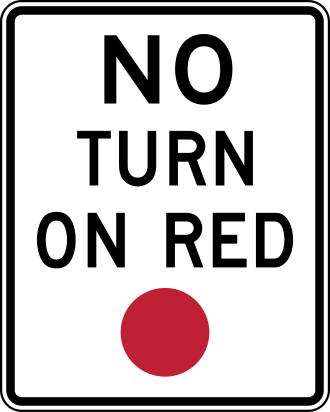
- Wait for a green signal before turning
- Turn left only when clear
- Proceed on red if no traffic is present
- Turn right only after stopping
Answer: A — Wait for a green signal before turning
A No Turn on Red sign means the driver may not turn on red and must wait for green.
14. What must a driver do at this sign?
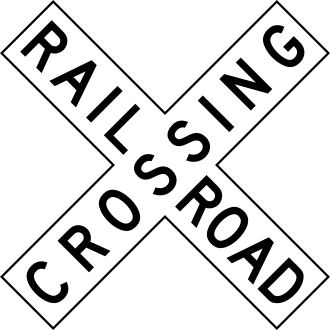
- Stop only if a gate is present
- Proceed without stopping if no train is visible in the distance
- Yield only when a train sounds its horn
- Look, listen, slow down and be ready to stop for a train
Answer: D — Look, listen, slow down and be ready to stop for a train
At a crossbuck a driver must slow, look, listen and be ready to yield to a train from either direction.
15. What does this sign warn of?
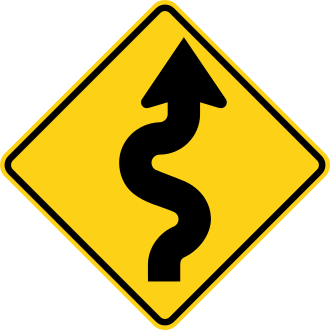
- A divided highway beginning
- A dead end ahead
- A single sharp curve ahead
- A series of curves ahead, requiring reduced speed throughout
Answer: D — A series of curves ahead, requiring reduced speed throughout
A winding road sign indicates a series of curves, not just one, calling for reduced speed on all of them.
16. What must a driver do at this sign?
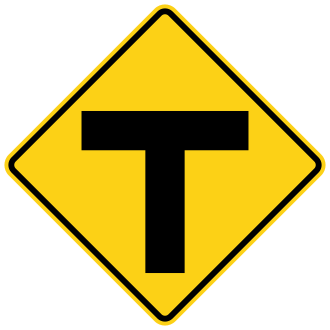
- Turn right or left ahead, after yielding
- Merge into a single lane
- Prepare to stop for a railroad crossing
- Continue straight through the intersection
Answer: A — Turn right or left ahead, after yielding
A T-intersection sign means the road ends ahead, so the driver must turn right or left and be ready to yield.
17. What must a driver do at this sign?
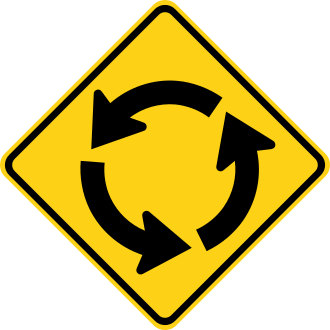
- Yield to traffic already in the circle and travel counterclockwise
- Yield and travel clockwise around the circle
- Proceed with the right-of-way over traffic already in the circle
- Stop completely before entering
Answer: A — Yield to traffic already in the circle and travel counterclockwise
At a roundabout, entering traffic yields to vehicles already circulating, and travel is counterclockwise.
18. What does this sign indicate?
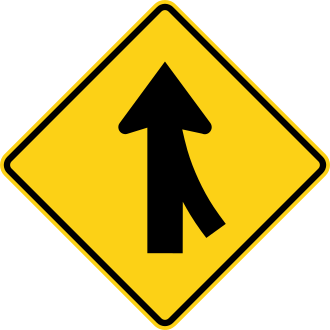
- Two lanes become one, and drivers in both lanes must merge safely
- A lane is being added, so no merge is needed
- A divided highway is beginning
- The right lane ends, so only right-lane traffic must merge
Answer: A — Two lanes become one, and drivers in both lanes must merge safely
A merge sign warns that two lanes are becoming one and drivers in both lanes must adjust to merge safely.
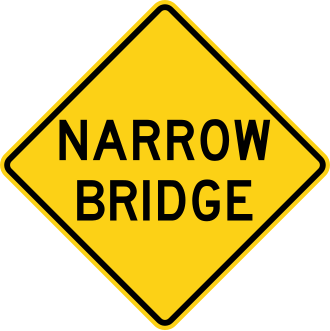
19. What should a driver do when seeing this sign?
- Merge left immediately
- Keep right; the highway splits into two one-way roadways
- Prepare to stop for a toll booth
- Slow down for the narrow bridge ahead
Answer: D — Slow down for the narrow bridge ahead
A narrow bridge sign warns of a narrow two-lane bridge or culvert ahead, calling for reduced speed.
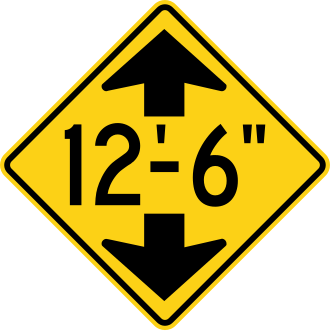
20. What does this sign mean for a driver?
- Reduce speed for a steep downgrade
- The road ahead is closed to all vehicles
- A vehicle or load taller than the height shown cannot pass under
- A narrow bridge is ahead
Answer: C — A vehicle or load taller than the height shown cannot pass under
A low clearance sign warns that vehicles or loads taller than the posted figure cannot pass under the obstruction.
21. What does an orange sign typically indicate?
- Guide information such as distances and exits
- Construction and maintenance warning
- Service information such as gas or lodging
- A regulatory requirement
Answer: B — Construction and maintenance warning
Orange is the standard color for construction and maintenance warning signs.
22. A driver deliberately knocks down a stop sign but causes no injury. How is this treated?
- A felony regardless of the outcome
- No violation unless a crash occurs
- A misdemeanor, becoming a felony only if it causes injury or death
- A civil infraction only
Answer: C — A misdemeanor, becoming a felony only if it causes injury or death
Damaging or removing a traffic control device is a misdemeanor, rising to a felony only when it causes injury or death.
23. A school zone's yellow light is flashing. What should a driver do?
- Stop completely regardless of traffic
- Slow to the posted limit, watch for children, and be ready to stop
- Maintain normal speed since school signs are only advisory
- Proceed only if no crossing guard is present
Answer: B — Slow to the posted limit, watch for children, and be ready to stop
A flashing school zone light requires slowing to the shown limit, watching for children, and being ready to stop.
24. How far back should a driver be prepared to stop when approaching a railroad crossing?
- 5 to 10 feet from the first track
- Only at the crossbuck sign itself
- 15 to 50 feet from the first track
- 100 to 150 feet from the first track
Answer: C — 15 to 50 feet from the first track
Drivers should slow and be ready to stop within 15 to 50 feet of the first track.
25. A driver is caught speeding in a construction zone with workers present. What happens to the fine?
- It is doubled
- It stays the same as a normal speeding fine
- It is capped at $50
- It is waived if no workers are visible
Answer: A — It is doubled
Speeding fines are doubled in a construction or maintenance zone when workers or equipment are present.
26. What does the slow-moving vehicle emblem identify?
- Agricultural, construction and highway maintenance equipment traveling 25 mph or less
- Vehicles hauling hazardous materials
- Emergency vehicles responding to a call
- School buses stopped to load children
Answer: A — Agricultural, construction and highway maintenance equipment traveling 25 mph or less
The slow-moving vehicle emblem marks agricultural, construction and highway maintenance equipment traveling at 25 mph or less.
27. A driver approaches an intersection just as the light turns steady yellow. What should they do?
- Speed up to clear the intersection before it turns red
- Proceed normally since yellow only warns pedestrians
- Stop if they can do so safely before the crosswalk
- Treat it the same as a flashing red light
Answer: C — Stop if they can do so safely before the crosswalk
A steady yellow light means the signal is about to turn red, so a driver should stop safely before the crosswalk rather than speed up.
28. A pedestrian is already in the crosswalk when the Don't Walk signal begins flashing. What should they do?
- Finish crossing to the other side
- Cross only if the traffic signal facing them shows green
- Return immediately to the curb they left from
- Stop and wait in the crosswalk
Answer: A — Finish crossing to the other side
A flashing Don't Walk means do not start crossing, but a pedestrian already in the intersection should finish crossing.
29. A driver sees a steady red X displayed over a reversible lane. What does it mean?
- The lane is closing soon but is currently open
- A left turn is permitted from the lane
- The lane is open for use
- Do not use the lane
Answer: D — Do not use the lane
A red X over a reversible lane means the lane may not be used.
30. A driver wants to pass on a two-lane road marked with a broken yellow line. Is this allowed?
- Only during daylight hours
- Only trucks may pass under this marking
- Yes, a broken yellow line permits passing on a two-lane, two-way road
- No, passing is never allowed where a yellow line is present
Answer: C — Yes, a broken yellow line permits passing on a two-lane, two-way road
A broken yellow line marks two-lane, two-way traffic where passing is permitted.
Take this test interactively
More Oklahoma Driver License practice tests
- Oklahoma Driver License: Driving Tips, Alcohol, DUI, Violations and Points — 31 questions
- Oklahoma Driver License: Pedestrians, Bicycles, Motorcycles, Trucks and Trains — 30 questions
- Oklahoma Driver License: Restrictions, Renewals, Registration, Insurance and Belts — 31 questions
- Oklahoma Driver License: Right-of-Way, Lanes, Expressways, Passing and Turning — 30 questions
- Oklahoma Driver License: Speed, Stopping, Following and Parking — 30 questions
- Oklahoma Driver License: Your License, Types, the GDL, Tests, Fees and Inspection — 31 questions