Connecticut Driver License: Markings, Signals and Signs
30 questions with the correct answer and an explanation for each.
Topic: Markings, Signals and Signs. Free, no account needed.
Take this test interactively
1. A driver on a two-lane road with a double solid yellow center line wants to turn left into a driveway on the opposite side. Is crossing the double yellow line allowed?
- Yes, but only on a divided highway
- Yes, crossing is allowed to turn left into or from an alley, private road, driveway or street
- No, the exception covers only alleys and private roads, not driveways
- No, double solid yellow lines may never be crossed
Answer: B — Yes, crossing is allowed to turn left into or from an alley, private road, driveway or street
Double solid yellow lines forbid passing but may still be crossed for a left turn into or out of an alley, private road, driveway or street.
2. A driver wants to change into an adjacent same-direction lane and sees a solid white line separating the lanes. What does this mean?
- Stay in the lane unless a special situation requires a change
- Lane changes are freely allowed if safe
- Passing is prohibited in both directions
- The lane is reserved for buses only
Answer: A — Stay in the lane unless a special situation requires a change
A solid white lane line means drivers should stay in their lane unless a special situation calls for a change.
3. A driver alone in a car approaches a lane marked with a white diamond and an "HOV 2" sign. May the driver use this lane?
- Yes, but only outside rush hour
- No, it is reserved for buses only
- No, the lane is reserved for vehicles with at least two occupants as the sign states
- Yes, any vehicle may use HOV lanes
Answer: C — No, the lane is reserved for vehicles with at least two occupants as the sign states
HOV lanes marked with a diamond are reserved for vehicles carrying at least the number of occupants stated on the sign.
4. At a red light with no oncoming traffic and no sign prohibiting it, a driver wants to turn right. What must the driver do first?
- Slow to a rolling stop and turn if no cross traffic is visible
- Come to a full stop, then turn if no oncoming traffic is coming and no sign prohibits it, watching for pedestrians
- Wait for a green arrow, since a stop alone does not permit the turn
- Turning right on a red light is never permitted at any intersection
Answer: B — Come to a full stop, then turn if no oncoming traffic is coming and no sign prohibits it, watching for pedestrians
A right turn on red requires a full stop first, then proceeding only if the way is clear and not prohibited, while watching for pedestrians.
5. A driver is already in the middle of an intersection when the light turns yellow. What should the driver do?
- Continue through the intersection
- Stop at the far side of the intersection and wait for the next green
- Stop immediately in the intersection
- Wait for the light to turn red before proceeding
Answer: A — Continue through the intersection
A driver already in an intersection when the light turns yellow should continue through rather than stopping in the intersection.
6. At a HAWK pedestrian signal, the lights are flashing red. What must a driver do?
- Treat it as a yield sign and slow without stopping
- Stop, then proceed once pedestrians have cleared
- Proceed immediately since flashing means the crossing is ending
- Stop and remain stopped until the signal goes dark
Answer: B — Stop, then proceed once pedestrians have cleared
A flashing red HAWK signal means the signal is about to deactivate: stop, then proceed once pedestrians have cleared.
7. What does a diamond-shaped road sign indicate?
- Directions to a nearby service such as fuel or lodging
- A stop is required ahead
- A regulatory rule that must be obeyed
- Special conditions or hazards ahead
Answer: D — Special conditions or hazards ahead
The diamond shape is used to warn of special conditions or hazards ahead.
8. A green road sign is meant to do what?
- Direct drivers to services such as hospitals and gas stations
- Guide drivers, telling where they are, which way to go and how far
- Warn of road conditions and dangers
- Mark parks and recreation areas
Answer: B — Guide drivers, telling where they are, which way to go and how far
Green signs are guide signs that tell drivers where they are, which way to go and how far.
9. A flagger is directing traffic around road work. How is this person typically dressed and equipped?
- A police uniform, directing traffic with hand signals only
- Reflective coveralls waving a green flag to signal go
- An orange or yellow vest or yellow-green shirt or jacket, using Stop/Slow paddles and red flags
- A white uniform holding only a stop sign
Answer: C — An orange or yellow vest or yellow-green shirt or jacket, using Stop/Slow paddles and red flags
Flaggers normally wear an orange or yellow vest or yellow-green shirt or jacket and use Stop/Slow paddles and red flags to direct traffic.
10. Mileposts run along a freeway from one end of the state to the other. Where does the numbering usually begin?
- At the highway's midpoint
- At the state capital
- At the north and east borders
- At the south and west borders
Answer: D — At the south and west borders
Milepost numbering usually starts at zero at the south and west borders of the state.
11. A driver approaches a railroad crossing with a crossbuck, flashing lights and a gate, and the lights begin to flash. What must the driver do?
- Stop only after the gate is fully down
- Stop, and stay stopped until the gates rise and the lights stop, never driving around a lowered gate
- Proceed slowly if no train is visible
- Speed up to cross before the gate lowers
Answer: B — Stop, and stay stopped until the gates rise and the lights stop, never driving around a lowered gate
Drivers must stop when the lights begin flashing, stay stopped until the gates rise and lights stop, and never drive around a lowered gate.
12. What must a driver do upon seeing this sign?
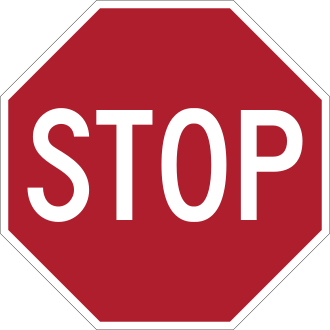
- Slow down and prepare to stop further ahead
- Stop only if other vehicles are present
- Come to a complete stop, then yield to vehicles and pedestrians before proceeding
- Slow down and yield to cross traffic without stopping
Answer: C — Come to a complete stop, then yield to vehicles and pedestrians before proceeding
An octagon sign always means a complete stop, followed by yielding to vehicles and pedestrians before proceeding.
13. What does this sign require of a driver?
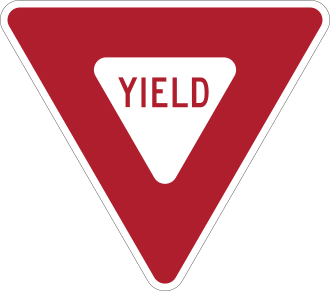
- Slowing to a reasonable speed, yielding, and stopping if necessary
- Merging with traffic ahead
- Watching for pedestrians only, with no change in speed
- A complete stop before proceeding
Answer: A — Slowing to a reasonable speed, yielding, and stopping if necessary
A yield sign means slow to a reasonable speed, yield to traffic, and stop if necessary.
14. What does this sign tell drivers?
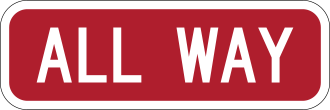
- Every approach must stop, and drivers arriving together yield to the driver on the right
- The intersection is a roundabout
- Traffic on the cross street has the right of way
- Only the main road has to stop
Answer: A — Every approach must stop, and drivers arriving together yield to the driver on the right
A 4-Way plaque means every road at the intersection stops, and drivers arriving together yield to whoever is on their right.
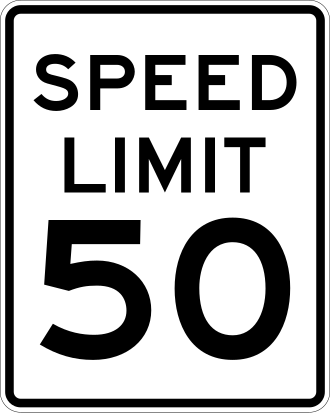
15. What does this sign tell a driver?
- The minimum speed allowed on the road
- An advisory speed for an upcoming curve only
- The speed required to keep up with surrounding traffic
- The maximum legal speed in good weather, though driving too fast for conditions can still be ticketed
Answer: D — The maximum legal speed in good weather, though driving too fast for conditions can still be ticketed
A speed limit sign gives the maximum legal speed in good conditions; drivers can still be ticketed for going too fast for actual conditions.
16. What does this sign prohibit?
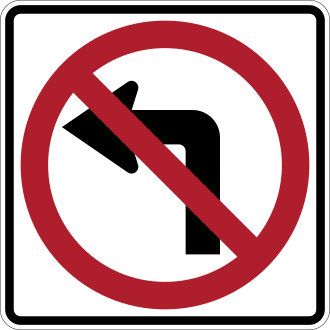
- Right turns only
- Passing other vehicles
- Left turns and U-turns, since a U-turn counts as two left turns
- All turns, including right turns
Answer: C — Left turns and U-turns, since a U-turn counts as two left turns
A No Left Turn sign prohibits left turns and, since a U-turn counts as two left turns, U-turns as well.
17. What must a driver not do upon seeing this sign?
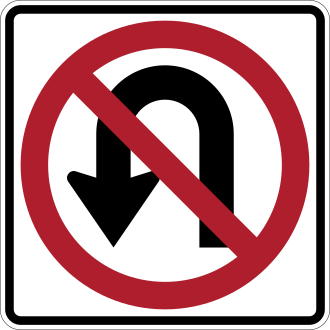
- Pass another vehicle
- Make a left turn
- Make a U-turn
- Park along the road
Answer: C — Make a U-turn
A No U-Turn sign prohibits making a U-turn at that location.
18. What is the lane marked by this sign reserved for?
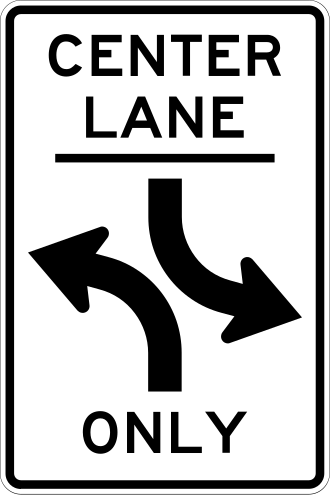
- Buses and bicycles only
- High-occupancy vehicles only
- Left turns, or U-turns where permitted, by traffic from both directions
- Passing slower traffic in either direction
Answer: C — Left turns, or U-turns where permitted, by traffic from both directions
A center lane marked for left turns is reserved for left turns, or U-turns where permitted, by traffic from both directions.
19. What does this sign mean?
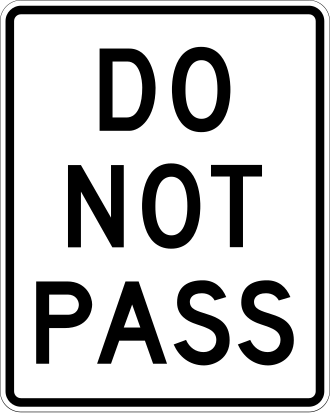
- The no-passing zone is ending
- A merge is ahead and passing is discouraged
- The start of a no-passing zone; do not pass even with a clear road
- Passing is allowed only on the left
Answer: C — The start of a no-passing zone; do not pass even with a clear road
This sign marks the start of a no-passing zone, where drivers must not pass even if the road looks clear.
20. A driver approaches an opening displaying this sign. What should the driver do?
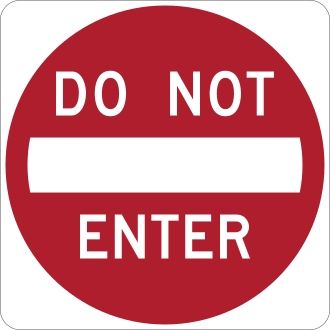
- Not drive into the opening in this direction
- Enter carefully, watching for oncoming traffic
- Enter only if turning right immediately
- Stop, then proceed since it functions like a stop sign
Answer: A — Not drive into the opening in this direction
A Do Not Enter sign marks an opening a driver must not enter in that direction, such as a wrong-way ramp or one-way street.
21. A driver sees this sign while driving. What should the driver do?
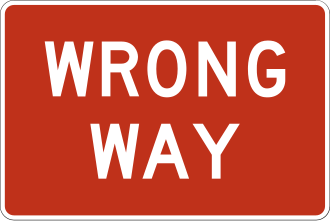
- Speed up to exit the area quickly
- Continue straight since it is only a warning
- Slow down, pull over and turn around carefully
- Turn right immediately without stopping
Answer: C — Slow down, pull over and turn around carefully
A Wrong Way sign means the driver is going against traffic and should slow down, pull over and turn around carefully.
22. What does this sign tell a driver about the street ahead?
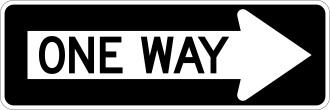
- The driver must turn around immediately
- Traffic flows in both directions
- The street is closed to all traffic
- Traffic flows only in the direction of the arrow
Answer: D — Traffic flows only in the direction of the arrow
A One Way sign means traffic on that street moves only in the direction the arrow points.
23. A driver stopped at a red light sees this sign. What must the driver do?
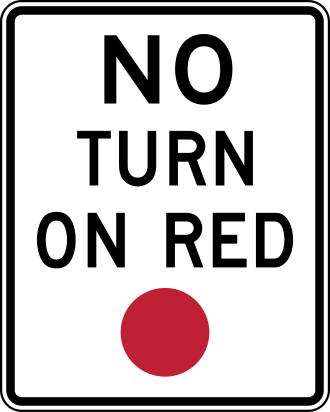
- Proceed straight through on red if no traffic is coming
- Turn right after a full stop if the way is clear
- Turn left only, not right, on red
- Not turn on red and wait for green
Answer: D — Not turn on red and wait for green
A No Turn on Red sign means the driver may not turn on the red light and must wait for green.
24. What does this sign require of a driver?
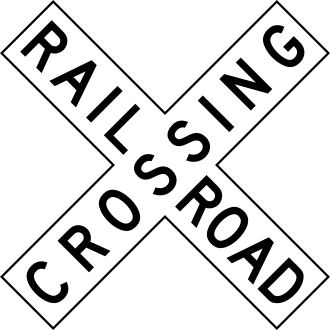
- Proceed at normal speed since it is only informational
- Look, listen, slow down and be ready to stop for trains from either direction
- Stop only if a train is visibly approaching
- Come to a full stop every time, regardless of trains
Answer: B — Look, listen, slow down and be ready to stop for trains from either direction
The crossbuck at a railroad crossing means to look, listen, slow down and be ready to stop for trains from either direction, functioning like a yield sign.
25. This sign appears ahead of an intersection. What should the driver expect?
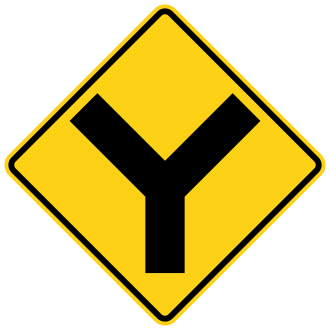
- The road ends at a stop sign
- A roundabout is ahead
- A side road enters from the right
- The driver must bear right or left ahead
Answer: D — The driver must bear right or left ahead
A Y Intersection sign warns that the road splits, and the driver must bear right or left.
26. What should a driver expect ahead, and how should they proceed?
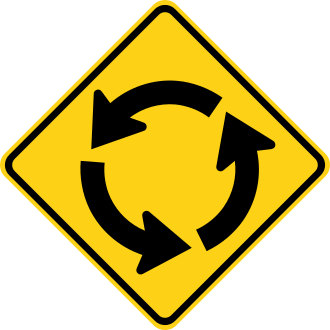
- A divided highway splitting into two one-way roads
- A roundabout ahead; yield to traffic already in the circle and go counterclockwise
- A four-way stop where the first to arrive goes first
- A T-intersection requiring a stop before turning
Answer: B — A roundabout ahead; yield to traffic already in the circle and go counterclockwise
This sign warns of a roundabout ahead, where drivers must yield to traffic already circulating and travel counterclockwise.
27. What is happening to the road ahead when this sign appears, and what should the driver do?
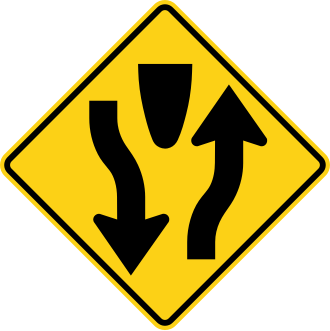
- The median is ending and traffic will go both ways; keep right
- A two-way roadway is beginning after a divided highway
- The highway is splitting into two one-way roadways; keep right
- The road is narrowing to one lane; merge left
Answer: C — The highway is splitting into two one-way roadways; keep right
This sign warns that a highway is about to split into two one-way roadways, and drivers should keep right.
28. What should a driver do on seeing this sign, especially in wet weather?
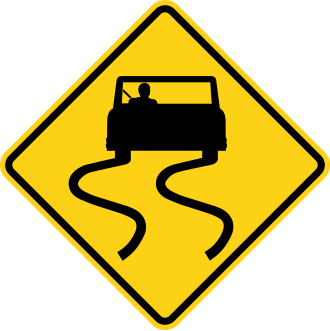
- Reduce speed and avoid hard braking or sudden direction changes
- Check the brakes for a steep grade ahead
- Stay on the pavement because the shoulder is soft
- Slow down because the shoulder drops off sharply
Answer: A — Reduce speed and avoid hard braking or sudden direction changes
This sign warns of slippery conditions when wet, calling for reduced speed and avoiding hard braking or sudden turns.
29. What does this sign advise?
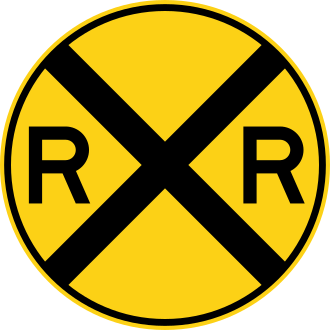
- A crossing is ahead: look, listen, slow down and be ready to stop for trains
- Stop immediately at the sign
- Merge left before the tracks
- Yield only if a train is sounding its horn
Answer: A — A crossing is ahead: look, listen, slow down and be ready to stop for trains
This is an advance warning sign for an upcoming railroad crossing, telling drivers to look, listen, slow down and be ready to stop.
30. What should a driver do on seeing this sign?
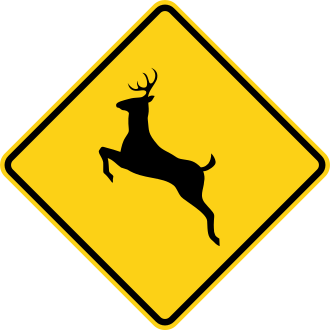
- Watch for bicycles crossing or riding beside traffic
- Slow down, be alert and be ready to stop for animals crossing
- Expect an intersection where vehicles may enter the road
- Watch for people entering a crosswalk
Answer: B — Slow down, be alert and be ready to stop for animals crossing
This sign warns of deer crossing, so drivers should slow down, stay alert and be ready to stop.
Take this test interactively
More Connecticut Driver License practice tests
- Connecticut Driver License: Alcohol, the Law, Speed, Right-of-Way, Parking, Lights and Emergencies — 30 questions
- Connecticut Driver License: Permits, Tests, Driver Education and Teen Restrictions — 30 questions
- Connecticut Driver License: Space, Passing, Turning, Hazards, Aggression, Distraction and Fatigue — 30 questions
- Connecticut Driver License: Steering, Scanning, Work Zones and Sharing the Road — 30 questions
- Connecticut Driver License: Vehicle Checks, Belts, Child Restraints, Phones and Insurance — 28 questions