Florida Driver License: Road Signs and Signals
30 questions with the correct answer and an explanation for each.
Topic: Road Signs and Signals. Free, no account needed.
Take this test interactively
1. On a divided highway, which pavement marking marks the left edge of the road?
- A double solid white line
- A single solid yellow line
- A single broken yellow line
- A single solid white line
Answer: B — A single solid yellow line
A single solid yellow line marks the left edge of the road on divided highways and one-way streets.
2. A driver approaching a curve sees the yellow center line solid on their side of the road and broken on the other side. What is the driver allowed to do?
- Not pass from this lane, but still turn left or pass a bicyclist when safe
- Pass bicyclists only, and never turn left
- Not pass, turn left, or pass a bicyclist under any circumstance
- Pass a vehicle ahead when safe, since the broken line is on the other side
Answer: A — Not pass from this lane, but still turn left or pass a bicyclist when safe
The line nearest the driver's own lane is the one that applies to them, and a solid line on their side forbids passing but not left turns or passing a bicyclist.
3. A driver wants to turn right at an intersection where the turn path crosses a marked bicycle lane. What must the driver do?
- Sound the horn before crossing the bike lane
- Merge into the bike lane and travel in it until turning
- Cross the bike lane only when no bicyclist is in it
- Never cross a bicycle lane under any circumstance
Answer: C — Cross the bike lane only when no bicyclist is in it
Motor vehicles cannot drive in a bike lane, but may cross one to turn only when it is clear of bicyclists.
4. What does a fluorescent yellow-green sign warn about?
- Guide and directional information
- A general warning about road conditions ahead
- Construction and maintenance work ahead
- School, pedestrian and bicycle activity
Answer: D — School, pedestrian and bicycle activity
Fluorescent yellow-green is reserved for high-emphasis warnings about school, pedestrian and bicycle activity.
5. A driver notices a sideways triangle sign standing on the left side of the road. What does it mark?
- A school crossing ahead
- The start of a no-passing zone
- A railroad crossing ahead
- A one-lane bridge ahead
Answer: B — The start of a no-passing zone
The pennant shape, placed on the left side of the road, marks the start of a no-passing zone.
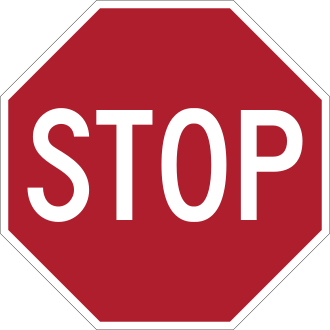
6. What must a driver do upon seeing this sign?
- Reduce speed to the posted limit before proceeding
- Merge with traffic already present before proceeding
- Come to a complete stop at the stop line, crosswalk, or intersection
- Slow down and yield to crossing traffic, proceeding if the way is clear
Answer: C — Come to a complete stop at the stop line, crosswalk, or intersection
This sign requires a full stop at the marked line, or the crosswalk or intersection if there is no line.
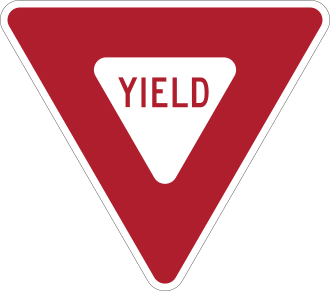
7. What does this sign require a driver to do?
- Come to a complete stop regardless of traffic
- Slow down and give the right-of-way to crossing traffic, stopping if needed
- Merge left immediately
- Wait for a green arrow before proceeding
Answer: B — Slow down and give the right-of-way to crossing traffic, stopping if needed
A driver need not stop if the way is clear, but must slow and yield to crossing traffic.
8. This plaque appears beneath a stop sign at a four-way intersection. What rule does it establish?
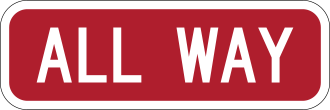
- Every direction must stop, and the first vehicle to arrive goes first
- Traffic signals will activate automatically for each direction
- Drivers must yield only to vehicles coming from the left
- Only cross traffic must stop
Answer: A — Every direction must stop, and the first vehicle to arrive goes first
At an all-way stop, every direction halts and vehicles proceed in the order they arrived.
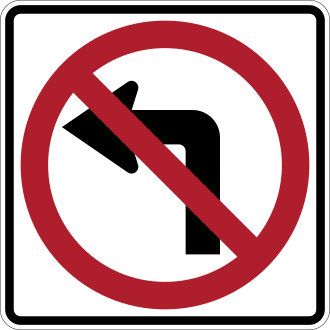
9. What does this sign prohibit at the intersection ahead?
- Turning around to travel the opposite direction
- A left turn
- A right turn
- Both right and left turns
Answer: B — A left turn
This sign forbids only a left turn at the upcoming intersection.
10. What is prohibited at a location marked with this sign?
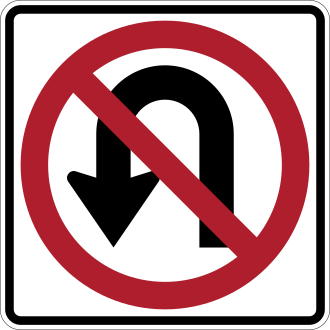
- Turning around to travel in the opposite direction
- Entering the roadway at all
- Turning left into a side street
- Passing another vehicle
Answer: A — Turning around to travel in the opposite direction
This sign bars a U-turn back toward the opposite direction of travel.
11. What must a driver do upon seeing this sign?
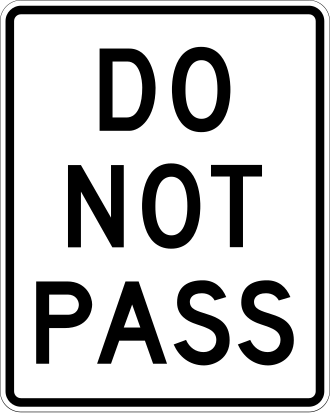
- Reduce speed and prepare to stop
- Merge into the right lane
- Pass only when it is safe to do so
- Not pass other vehicles here
Answer: D — Not pass other vehicles here
This sign forbids passing entirely, unlike a caution-only passing sign.
12. What does this sign require of a driver traveling below the speed of surrounding traffic?
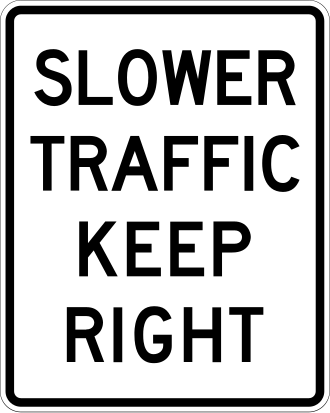
- Stay to the right of a divider or island at all times
- Increase speed to match surrounding traffic
- Stay in the right lane except to pass, and yield the left lane to faster vehicles
- Pull off the roadway to let traffic pass
Answer: C — Stay in the right lane except to pass, and yield the left lane to faster vehicles
Slower vehicles must use the right lane except to pass, and must leave the left lane when a faster vehicle approaches from behind.
13. What should a driver do immediately upon seeing this sign?
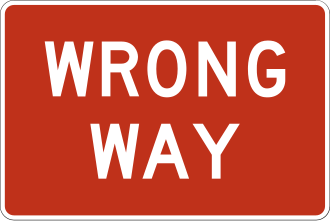
- Pull to the shoulder and wait for another vehicle to pass
- Turn around immediately, since they are driving against traffic
- Continue forward cautiously
- Slow down and prepare to merge
Answer: B — Turn around immediately, since they are driving against traffic
This sign warns that the driver is traveling against the flow of traffic and must reverse direction at once.
14. Who may legally park in a space marked with this sign?
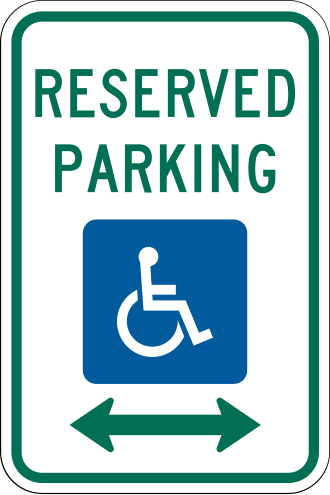
- Only a vehicle displaying an official disabled parking permit and carrying the person it belongs to
- Vehicles displaying any government-issued permit
- Any vehicle, for a short time only
- Emergency vehicles only
Answer: A — Only a vehicle displaying an official disabled parking permit and carrying the person it belongs to
The space is reserved for a vehicle bearing a disabled parking permit while transporting the permit holder.
15. What must a driver do at a red light where this sign is posted?
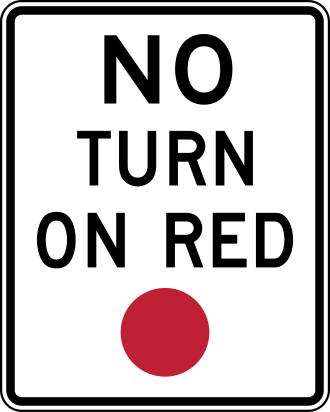
- Proceed straight through without stopping
- Turn left only, since right turns remain allowed
- Wait for the green signal before turning
- Turn right after coming to a complete stop
Answer: C — Wait for the green signal before turning
This sign overrides the usual right-on-red allowance, requiring drivers to wait for green before turning.
16. What does this sign require of a driver approaching the crossing?
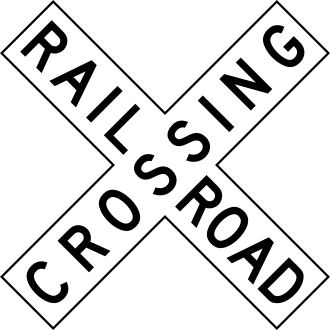
- Yield to any approaching train, which has the right-of-way
- Come to a complete stop regardless of an approaching train
- Merge into a single lane before crossing
- Proceed at normal speed unless lights are flashing
Answer: A — Yield to any approaching train, which has the right-of-way
This crossbuck functions as a yield sign, giving trains the right-of-way.
17. What should a driver do upon seeing this sign?
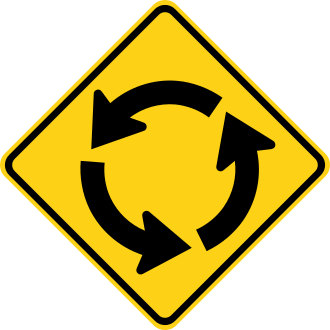
- Slow down and be ready to yield to traffic already in the circle
- Come to a complete stop before entering
- Speed up to merge with circulating traffic
- Prepare for a sharp turn in one direction only
Answer: A — Slow down and be ready to yield to traffic already in the circle
This sign warns of a roundabout ahead, where entering traffic must yield to vehicles already circulating.
18. What does this sign warn a driver to prepare for?
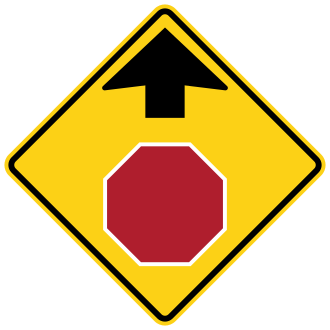
- A signal ahead that may be hard to see
- A railroad crossing ahead
- A dead end ahead
- A stop sign ahead that may be hard to see
Answer: D — A stop sign ahead that may be hard to see
This sign warns of poor visibility of a stop sign ahead, so the driver should slow and be ready to stop.
19. What must a driver do before crossing a bridge marked with this sign?
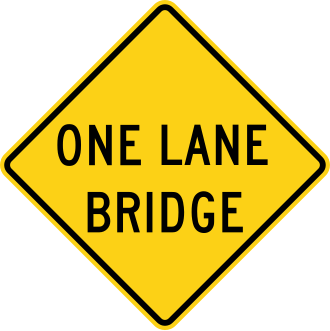
- Watch for a soft shoulder on the far side
- Stay in their lane, since two lanes remain available
- Reduce speed for a low overhead clearance
- Make sure no vehicle is coming from the other direction before crossing
Answer: D — Make sure no vehicle is coming from the other direction before crossing
The bridge has room for only one vehicle at a time, so the driver must confirm the way is clear before crossing.
20. What should a driver expect and do when seeing this sign?
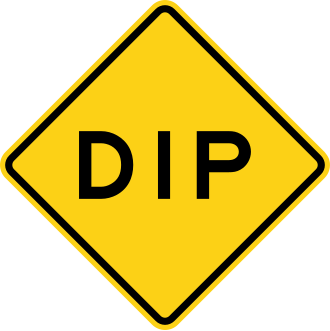
- Slow down for a low spot in the road, and be ready to stop if it is flooded
- Prepare for the pavement to end ahead
- Watch for a soft, unpaved shoulder ahead
- Slow down for a hump in the road
Answer: A — Slow down for a low spot in the road, and be ready to stop if it is flooded
This sign marks a low spot that could be flooded, requiring reduced speed and readiness to stop.
21. A traffic signal at an intersection is dark, and no police officer is directing traffic. How should drivers treat the intersection?
- As a four-way stop
- Wait for the signal to resume working before proceeding
- As a yield sign only for cross traffic
- Proceed without stopping if no other vehicles are visible
Answer: A — As a four-way stop
A dark or malfunctioning signal with no officer present must be treated as a four-way stop.
22. A driver in a turn lane sees a flashing yellow arrow pointing in their direction while oncoming traffic has a green light. What must the driver do?
- Turn immediately, since the arrow grants the right-of-way
- Treat it the same as a red arrow and come to a complete stop
- Turn when safe, yielding to oncoming traffic and pedestrians
- Wait, since turns are not allowed on a flashing yellow arrow
Answer: C — Turn when safe, yielding to oncoming traffic and pedestrians
A flashing yellow arrow permits the turn, but the driver must yield to oncoming traffic and pedestrians.
23. A driver on a multi-lane roadway sees an overhead lane-control signal showing a red X above their lane. What does this mean?
- The signal is about to change to green
- The driver must never drive in that lane
- The lane is reserved for turning traffic only
- The lane is closing soon but currently open
Answer: B — The driver must never drive in that lane
A red X over a lane means that lane must never be driven in.
24. What does this sign indicate?
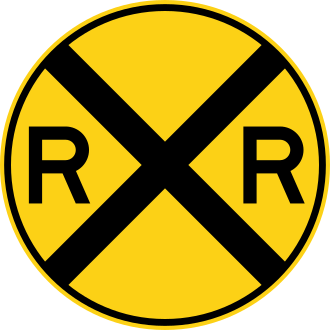
- Drivers must come to a complete stop at the crossing ahead
- Advance warning of a railroad crossing ahead; slow down and be ready to stop
- The crossing has automatic gates
- A train is currently crossing the road
Answer: B — Advance warning of a railroad crossing ahead; slow down and be ready to stop
This is the advance warning sign for a railroad crossing, usually the first sign a driver sees.
25. What should a driver do upon seeing this sign?
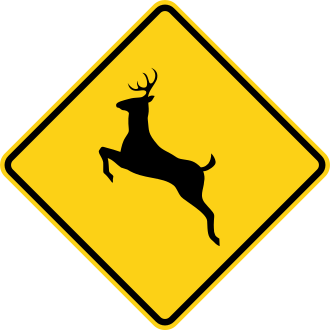
- Watch for pedestrians crossing
- Watch for bicyclists entering the roadway
- Watch for animals that may cross the road
- Watch for trucks entering the road
Answer: C — Watch for animals that may cross the road
This sign warns of animal activity, which is most common at dusk and night.
26. What must a driver check before proceeding past this sign?
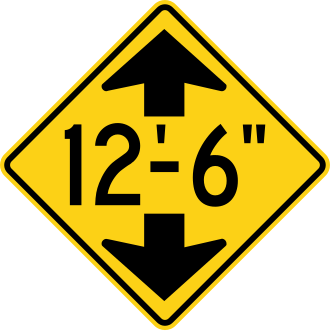
- Whether their vehicle's height exceeds the clearance shown
- Whether the bridge ahead supports their vehicle's weight
- Whether their vehicle's width exceeds the lane width
- Whether the road ahead is closed to trucks
Answer: A — Whether their vehicle's height exceeds the clearance shown
This sign warns that a vehicle taller than the posted height must not enter.
27. What does this sign tell a driver about the street ahead?
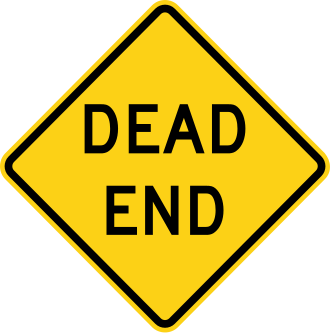
- It ends at a T intersection requiring a turn
- It narrows to one lane ahead
- It has no outlet and simply stops
- It has no through outlet for the whole neighborhood of streets
Answer: C — It has no outlet and simply stops
This sign marks a single street that ends with no outlet, distinct from the sign warning of a whole neighborhood without a through exit.
28. What should a driver do upon seeing this sign?
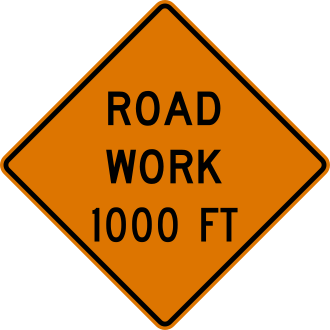
- Maintain normal speed since work zones are outside the roadway
- Prepare to stop for a railroad crossing
- Slow down and follow signs, flaggers and officers in the work zone
- Watch for a lane reserved for buses or carpools
Answer: C — Slow down and follow signs, flaggers and officers in the work zone
This sign warns of a work zone, where drivers must slow down and follow the direction of signs, flaggers and officers.
29. When must a driver obey the reduced speed shown on this sign?
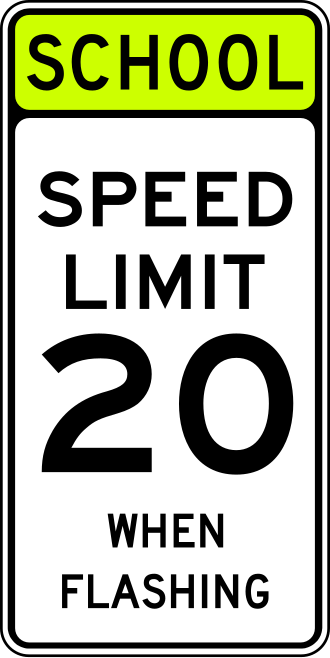
- Only during posted times or while the beacon is flashing
- Only when children are visibly present
- At all times, regardless of the time of day
- Only on school days between classes
Answer: A — Only during posted times or while the beacon is flashing
The reduced school-zone speed applies during posted times or when the beacon is flashing, not at all hours.
30. What does this sign identify?
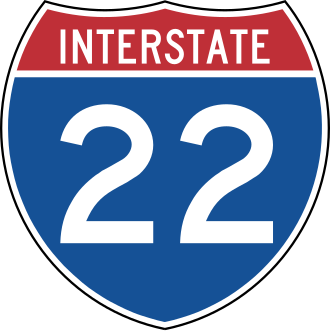
- A rest area ahead
- An expressway exit
- A hospital service route
- An Interstate highway
Answer: D — An Interstate highway
This shield identifies the roadway as part of the Interstate highway system.
Take this test interactively
More Florida Driver License practice tests