Pennsylvania Driver License: Signals, Signs and Markings
30 questions with the correct answer and an explanation for each.
Topic: Signals, Signs and Markings. Free, no account needed.
Take this test interactively
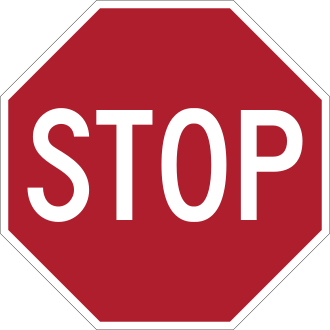
1. What must a driver do on seeing this sign?
- Slow down and yield to cross traffic, stopping only if necessary
- Stop only if other vehicles are visible at the intersection
- Slow to a crawl and proceed if the way looks clear
- Come to a complete stop, check pedestrians and cross traffic, then go when clear
Answer: D — Come to a complete stop, check pedestrians and cross traffic, then go when clear
A full stop is required before proceeding, unlike a yield sign where slowing may be enough.
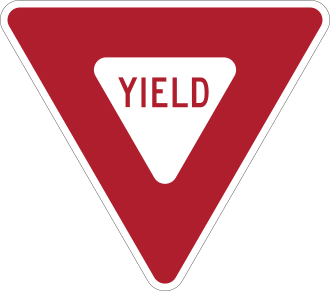
2. What does this sign require of a driver?
- Proceed without slowing if no vehicles are in sight
- Come to a complete stop before proceeding, regardless of traffic
- Treat the intersection as a four-way stop
- Slow down and give the right-of-way to pedestrians and cross traffic, stopping only if necessary
Answer: D — Slow down and give the right-of-way to pedestrians and cross traffic, stopping only if necessary
Unlike a stop sign, this sign only requires a full stop when it is necessary to avoid interfering with traffic.
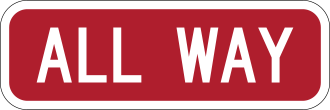
3. What does this plaque, posted below a stop sign, mean?
- Only the first vehicle to arrive must stop; others may proceed
- Only cross traffic must stop; the main road has the right-of-way
- The intersection is controlled by a traffic signal, not a stop sign
- All four directions of traffic at the intersection must stop
Answer: D — All four directions of traffic at the intersection must stop
The plaque tells drivers every approach to the intersection has its own stop sign.
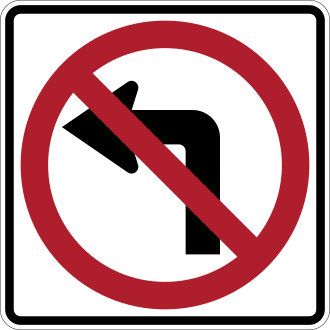
4. What must a driver do on seeing this sign?
- Right turns are prohibited here
- U-turns are prohibited here
- Left turns are prohibited here
- Yield before turning left
Answer: C — Left turns are prohibited here
The sign prohibits the specific movement it names.
5. What must a driver do on seeing this sign?
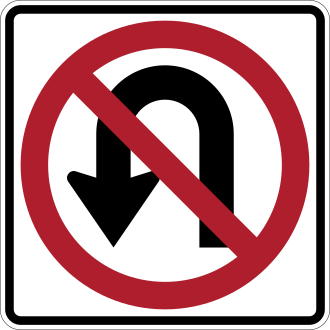
- Turning around to go the opposite direction is prohibited here
- Left turns are prohibited here
- Parking is prohibited here
- Passing is prohibited here
Answer: A — Turning around to go the opposite direction is prohibited here
This sign bans reversing direction at that location.
6. What is this lane reserved for?
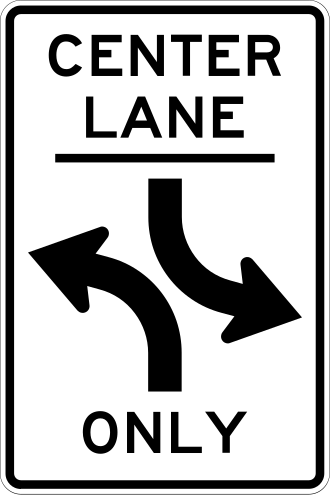
- Left turns from either direction of travel
- Passing slower vehicles
- Through traffic only
- Right turns only
Answer: A — Left turns from either direction of travel
The lane is shared by left-turners from both directions and may never be used for through travel or passing.
7. What must a driver do on seeing this sign?
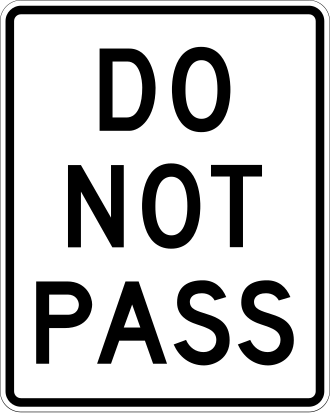
- No parking is allowed along this stretch of road
- Passing vehicles traveling in your direction is prohibited
- Passing is allowed only from the left side
- No trucks may use this road
Answer: B — Passing vehicles traveling in your direction is prohibited
The sign bans passing vehicles going the same way as you.
8. What must a driver do on seeing this sign?
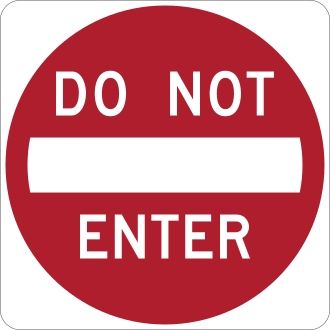
- Watch for oncoming traffic merging into your lane
- Trucks may not use this road
- Do not drive onto this roadway; it is closed to your direction of travel
- The road ends ahead
Answer: C — Do not drive onto this roadway; it is closed to your direction of travel
This sign marks the start of a one-way street or ramp where entry from that direction is forbidden.
9. What does this sign mean?
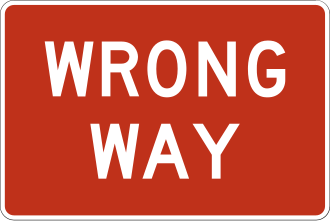
- You have entered a one-way road against traffic
- A divided highway begins ahead
- You are approaching a dead end ahead
- You are entering a construction zone
Answer: A — You have entered a one-way road against traffic
This sign catches drivers who have mistakenly entered a one-way roadway against its flow.
10. What does this sign mean?
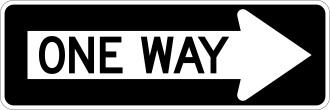
- Traffic may travel in either direction on this street
- Traffic on this street or ramp moves only in the direction the arrow points
- This lane is reserved for turns only
- This road is closed ahead
Answer: B — Traffic on this street or ramp moves only in the direction the arrow points
Entering against the arrow's direction risks a head-on crash.
11. What does this sign mean?
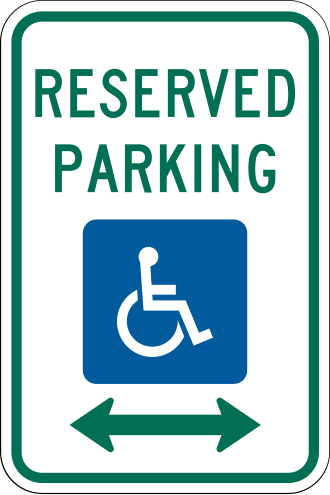
- Any vehicle may park here for a limited time
- Parking is prohibited entirely at this location
- Only vehicles displaying a plate or placard for disabled persons or severely disabled veterans may park here
- Parking is reserved for delivery vehicles only
Answer: C — Only vehicles displaying a plate or placard for disabled persons or severely disabled veterans may park here
Others who park in the space are fined and towed.
12. What must a driver do on seeing this sign?
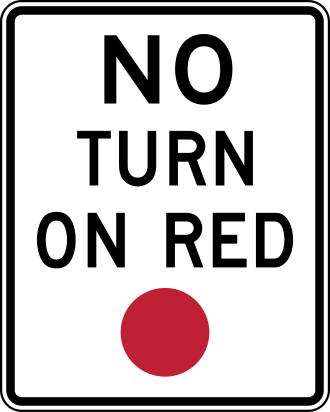
- You may turn after stopping and yielding to traffic
- You must come to a complete stop and proceed straight only
- You must wait for a green signal before turning
- Turns are allowed only from the left lane
Answer: C — You must wait for a green signal before turning
This sign overrides the normal right-turn-on-red allowance.
13. A driver approaches this sign with no flashing lights or lowered gate present. What must they do?
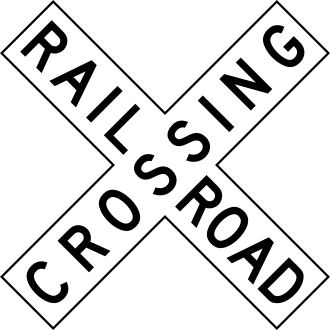
- Come to a complete stop as at a stop sign, even with no train present
- Treat it like a yield sign, slowing and preparing to stop if a train is coming
- Proceed at normal speed since no train signals are active
- Treat it as a warning for merging traffic
Answer: B — Treat it like a yield sign, slowing and preparing to stop if a train is coming
This sign carries the same obligation as a yield sign: slow and be ready to stop for a train.
14. What does this sign mean?
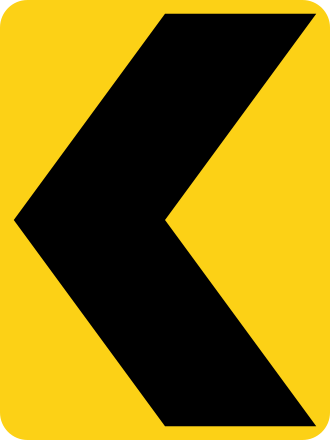
- A railroad crossing is ahead
- Traffic merges from the right ahead
- The road ahead bends sharply in the direction the symbol points
- A divided highway begins ahead
Answer: C — The road ahead bends sharply in the direction the symbol points
This marks a sharp change of direction, with the road bending the way it points.
15. What does this sign mean?
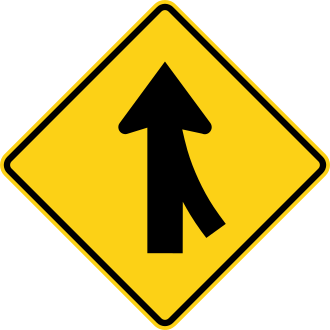
- Your lane ends ahead and you must merge left
- Traffic will join your lane from the side shown and must yield to you
- An added lane is beginning; no merge is needed
- Two-way traffic begins ahead
Answer: B — Traffic will join your lane from the side shown and must yield to you
Entering traffic from a road or ramp must yield to traffic already in your lane.
16. What must a driver do on seeing this sign?
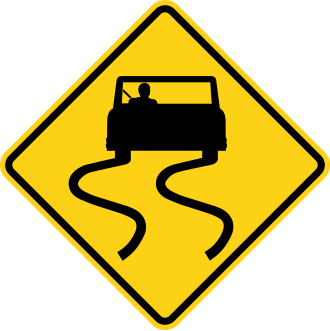
- Reduce speed, increase following distance, and avoid sudden acceleration, braking or steering
- The shoulder ahead is unpaved and unstable
- Sharp curves are ahead; slow substantially
- A steep downgrade is ahead; shift to a lower gear
Answer: A — Reduce speed, increase following distance, and avoid sudden acceleration, braking or steering
Wet pavement calls for slower speed, more following distance, and no abrupt inputs.
17. What does this sign mean?
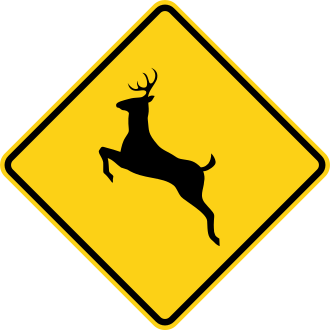
- Livestock may be on the road ahead
- Bicyclists frequently cross here
- A pedestrian crossing is ahead
- Deer frequently cross the road in this area
Answer: D — Deer frequently cross the road in this area
This sign warns of a location where deer commonly cross.
18. What does this sign, posted on the left side of the road, mark?
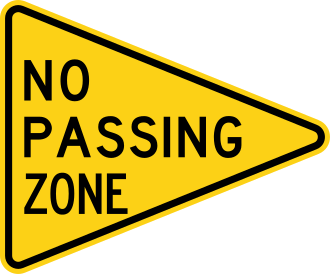
- The end of a no-passing zone
- A one-way street beginning
- A merging lane on the left
- The start of a no-passing zone
Answer: D — The start of a no-passing zone
This pennant-shaped sign marks where a no-passing zone begins.
19. A driver stops at a red light where no NO TURN ON RED sign is posted, and no pedestrians or cross traffic are present. What may they do?
- Proceed straight through without stopping
- Turn right after stopping and yielding to pedestrians and traffic
- Wait only for a green arrow before turning
- Turn left from any lane
Answer: B — Turn right after stopping and yielding to pedestrians and traffic
A steady red light allows a right turn after a full stop and yielding, unless it is specifically prohibited.
20. A driver has a steady green arrow pointing left at an intersection. What does this indicate about oncoming traffic?
- Oncoming traffic must yield but may still be moving
- Oncoming traffic has a red light, so the turn is protected
- The turn is only safe after checking for a train
- Oncoming traffic has a flashing yellow arrow
Answer: B — Oncoming traffic has a red light, so the turn is protected
A steady green arrow gives a protected turn because opposing traffic is stopped at red.
21. A driver faces a flashing yellow arrow for a left turn. What must they do?
- Turn without yielding, since the movement is protected
- Treat it the same as a flashing red light and come to a full stop
- Turn with caution after yielding to oncoming traffic and pedestrians, since the movement is not protected
- Stop completely and wait for a steady green arrow
Answer: C — Turn with caution after yielding to oncoming traffic and pedestrians, since the movement is not protected
A flashing yellow arrow permits the turn, but oncoming traffic has a green light, so the driver must yield first.
22. A traffic signal at an intersection is completely dark because of a power outage. How should drivers treat the intersection?
- Whoever arrives fastest has the right-of-way
- As a flashing yellow, slowing with caution only
- As a four-way stop
- As a yield for all directions
Answer: C — As a four-way stop
A dark, non-functioning signal is treated the same as a four-way stop.
23. A driver passes through a school zone while the flashing yellow lights on the speed limit sign are active. What is the maximum speed, and what happens if they exceed it?
- 35 mph; two points plus a fine
- 25 mph; a fine only, no points
- 15 mph; three points plus a fine
- 15 mph; license suspension on the first offense
Answer: C — 15 mph; three points plus a fine
While the school zone lights flash, the limit drops to 15 mph, and speeding there adds three points plus a fine.
24. A pedestrian is already partway across the street when the DON'T WALK signal begins flashing. What should they do?
- Finish crossing to the other side
- Stop immediately in the middle of the street
- Return to the curb they left from
- Wait for the next steady WALK signal
Answer: A — Finish crossing to the other side
A flashing DON'T WALK tells a pedestrian already in the street to finish crossing, not to start a new crossing.
25. Traffic backed up from a stop sign extends across a railroad crossing. What should a driver do?
- Proceed through the crossing even though traffic ahead is stopped
- Stop entirely clear of the tracks and wait for room ahead to open
- Stop with the vehicle straddling the tracks since it is safer than blocking traffic
- Reverse away from the crossing until a gap opens elsewhere
Answer: B — Stop entirely clear of the tracks and wait for room ahead to open
A vehicle must never stop on the tracks; it should stop clear of them even if that means waiting short of the backed-up traffic.
26. A striped object marker at a guide rail has its stripes angled down toward the left. What should a driver do?
- Keep left of the hazard
- Keep right of the hazard
- Pass on either side of the hazard
- Stop before the marker
Answer: A — Keep left of the hazard
The stripes point toward the side the driver should move to, so stripes angled left mean keep left.
27. A driver is stopped for a violation while driving through a posted work zone without headlights on, even though no workers happen to be present at that moment. What extra penalty applies specifically for the missing headlights?
- The vehicle is towed
- A mandatory court appearance
- An extra $25 fine
- Three additional points on the license
Answer: C — An extra $25 fine
Headlights are required in every posted work zone, active or not, and skipping them adds $25 to a violation.
28. A driver passes Exit 20 and later reaches Exit 95 on the same highway. About how many miles have they traveled between the two exits?
- 75 miles
- 20 miles
- 95 miles
- 115 miles
Answer: A — 75 miles
Exit numbers correspond to mile markers, so the distance is the difference between the two numbers.
29. A driver is traveling on an interstate with a two-digit even route number. What general direction does this route run, and how do the numbers increase?
- East-west, increasing from south to north
- North-south, increasing from west to east
- North-south, increasing from east to west
- East-west, increasing from north to south
Answer: A — East-west, increasing from south to north
Even interstate numbers run east-west, with numbering increasing from south to north.
30. A driver approaches a two-lane road marked with a double solid yellow center line and no sign posted. May they pass?
- Yes, passing is allowed from either side when safe
- No, unless a broken line appears on their side
- Yes, but only from the right side
- No, passing is prohibited in either direction regardless of signs
Answer: D — No, passing is prohibited in either direction regardless of signs
A double solid yellow line bans passing in both directions whether or not a sign is posted.
Take this test interactively
More Pennsylvania Driver License practice tests