Texas Driver License: Road Signs and Signals
30 questions with the correct answer and an explanation for each.
Topic: Road Signs and Signals. Free, no account needed.
Take this test interactively
1. What must a driver do upon reaching this sign?
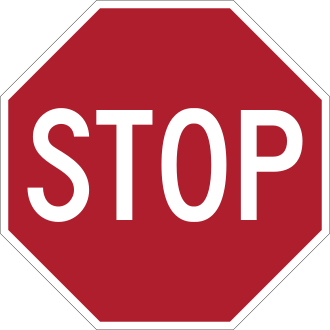
- Yield to traffic on the intersecting road without necessarily stopping
- Come to a complete stop only if another vehicle already stopped there
- Come to a complete stop, yield to pedestrians and vehicles, then proceed when safe
- Slow down and stop only if cross traffic is present
Answer: C — Come to a complete stop, yield to pedestrians and vehicles, then proceed when safe
The rule applies to every vehicle that reaches the sign, not just when traffic happens to be present.
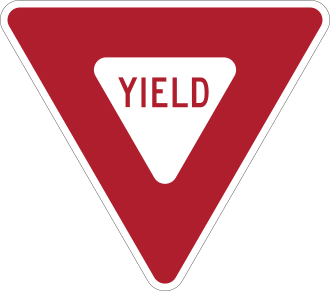
2. What does a driver need to do upon encountering this sign?
- Merge left because the lane you are in is ending
- Reduce speed because a school zone is ahead
- Come to a complete stop before proceeding, no matter the traffic conditions
- Slow or stop as needed to yield the right-of-way to vehicles, pedestrians and bicycles on the other road
Answer: D — Slow or stop as needed to yield the right-of-way to vehicles, pedestrians and bicycles on the other road
A stop is only required if needed to yield; unlike a stop sign, slowing without stopping is enough if the way is clear.
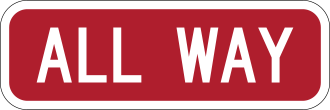
3. At an intersection with this sign posted at every approach, how do drivers proceed?
- Vehicles turning left always go before vehicles going straight
- The driver already stopped waits for a police officer's signal to proceed
- Every approach stops, then goes in order of arrival; if two vehicles arrive together, the one on the right goes first
- Only cross traffic must stop; the driver's own street has the right-of-way
Answer: C — Every approach stops, then goes in order of arrival; if two vehicles arrive together, the one on the right goes first
This plaque means every approach is stop-controlled, with order of arrival deciding who goes, and a right-of-way tiebreaker for simultaneous arrivals.
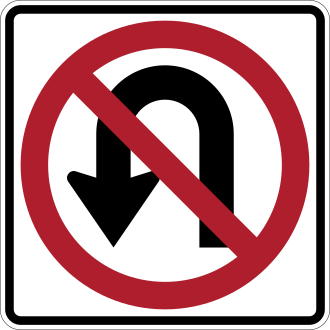
4. What is prohibited at an intersection displaying this sign?
- Passing another vehicle near that intersection
- Turning around at that intersection
- Turning left at that intersection
- Turning right at that intersection
Answer: B — Turning around at that intersection
This sign bars a U-turn, distinct from the separate signs prohibiting left or right turns.
5. What is the center lane used for on a road marked with this sign?
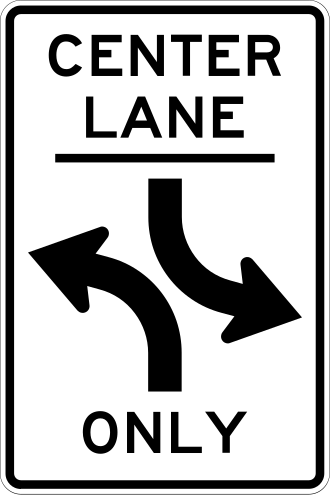
- Passing slower traffic when the lane is clear
- Through traffic when other lanes are congested
- Right turns only, to avoid blocking the intersection
- Only for vehicles turning left, entered where there is room to slow or stop safely
Answer: D — Only for vehicles turning left, entered where there is room to slow or stop safely
The center lane is reserved solely for left turns and must never be used for passing or through travel.
6. Who is permitted to use a lane marked with this sign during its posted hours?
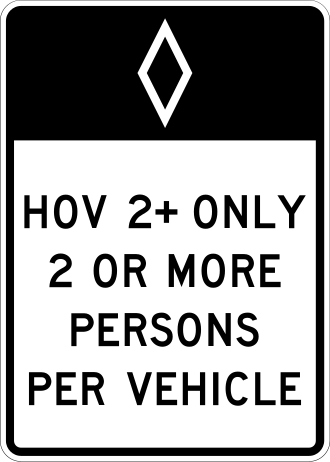
- Emergency vehicles only
- Any vehicle, but only during off-peak hours
- Buses and carpools only, during the posted hours
- Trucks only, to keep them separated from car traffic
Answer: C — Buses and carpools only, during the posted hours
This lane is restricted to buses and carpools for the specific hours posted, such as a weekday morning window.
7. What does this sign indicate about passing?
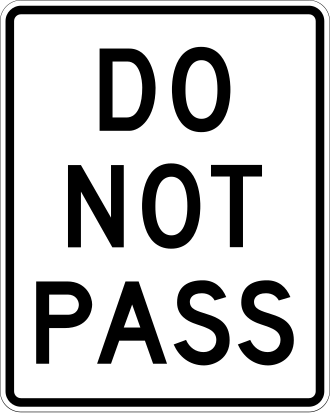
- Passing is allowed only using the left lane
- Passing is prohibited because sight distance ahead is too short to pass safely
- Passing is prohibited because a bridge is narrowing ahead
- Passing is prohibited because a school zone is ahead
Answer: B — Passing is prohibited because sight distance ahead is too short to pass safely
This sign marks a no-passing zone specifically because a driver cannot see far enough ahead to pass safely.
8. A driver going slower than surrounding traffic sees this sign. What should the driver do?
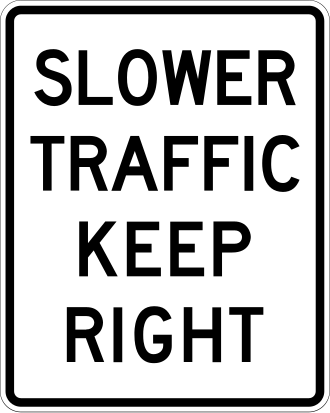
- Stay out of only the far left lane, but any other lane is fine
- Pull onto the shoulder to let traffic pass
- Increase speed to match the flow of traffic
- Move into the right-hand lane
Answer: D — Move into the right-hand lane
Slower drivers are directed specifically to the right-hand lane, not merely out of the leftmost one.
9. What does this sign tell a driver about the road ahead?
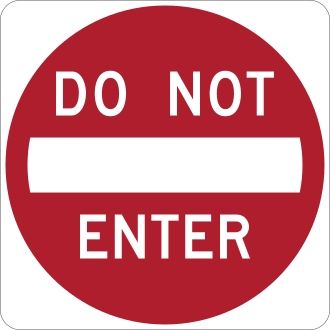
- The road ahead carries one-way traffic toward the driver
- The road ahead is closed for construction
- The driver is already driving the wrong way on a one-way street
- Trucks are prohibited from entering the road ahead
Answer: A — The road ahead carries one-way traffic toward the driver
This sign warns a driver approaching from the wrong direction not to enter, before they get onto the one-way road.
10. A driver who sees this sign facing them while already driving realizes what?
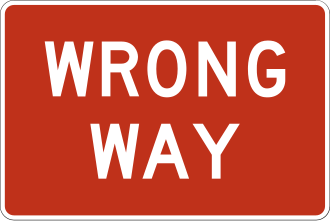
- The driver is driving against traffic on a one-way street
- The driver has entered a restricted HOV lane
- A road closure requires an immediate detour
- The driver is approaching a one-way street that must not be entered
Answer: A — The driver is driving against traffic on a one-way street
This sign faces drivers who have already entered a one-way street going the wrong direction, unlike the Do Not Enter sign posted before entry.
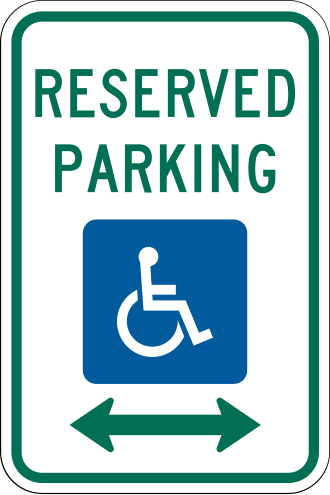
11. Who may park in a space marked with this sign?
- Only emergency vehicles
- Only vehicles making deliveries
- Any vehicle, for up to 15 minutes
- Only a vehicle displaying a disabled plate or placard
Answer: D — Only a vehicle displaying a disabled plate or placard
This space is reserved for vehicles carrying a disabled plate or windshield placard.
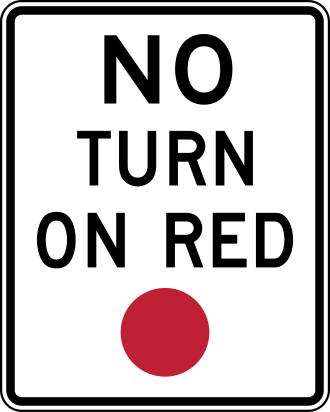
12. What must a driver do at an intersection with this sign when facing a red light and wanting to turn?
- Proceed with the turn if no pedestrians are present
- Turn after coming to a complete stop, as with any red light
- Turn left only if the cross street is one-way
- Wait for a green signal before turning
Answer: D — Wait for a green signal before turning
This sign overrides the general allowance to turn on red, so the driver must wait for green.
13. What must a driver do upon seeing this sign?
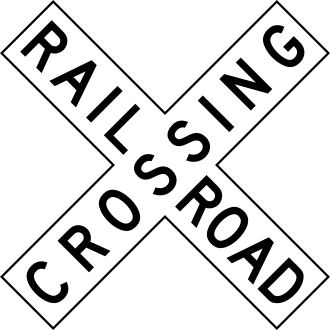
- Stop only if the gates are visibly lowered
- Proceed at normal speed since the crossing is already marked
- Come to a complete stop regardless of whether a train is visible
- Slow down, look and listen, and be ready to yield to a train
Answer: D — Slow down, look and listen, and be ready to yield to a train
This sign marks every crossing and calls for slowing, looking and listening, with a full stop required only if a train is actually coming.
14. What does this sign warn a driver to do?
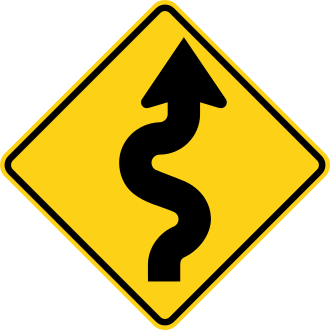
- Watch for a divided highway beginning ahead
- Prepare for a T-intersection ahead
- Slow down for a single sharp curve just ahead
- Drive slowly and carefully through a series of curves; do not pass
Answer: D — Drive slowly and carefully through a series of curves; do not pass
This sign warns of a series of curves rather than a single bend, calling for slow, careful driving and no passing.
15. What does this sign warn a driver about the road ahead?
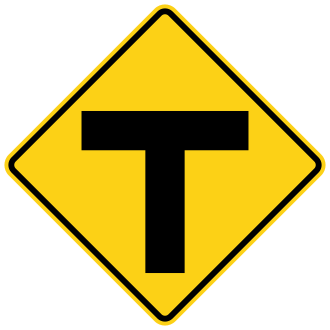
- The road splits into two directions, and either may be taken
- A road joins from the side while the driver's road continues straight
- The road ends; the driver must turn left or right and may need to yield
- A crossroad lies ahead, so the driver should watch for cross traffic
Answer: C — The road ends; the driver must turn left or right and may need to yield
This sign marks a junction where the driver's road ends, forcing a turn and possibly a yield.
16. What should a driver do when approaching this sign?
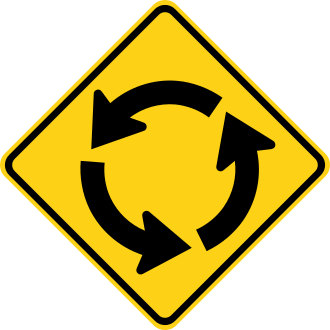
- Come to a complete stop before entering, regardless of traffic
- Slow down and yield to traffic already in the circular intersection
- Prepare for a divided highway ahead
- Merge left because a lane is ending
Answer: B — Slow down and yield to traffic already in the circular intersection
This sign warns of a circular intersection where entering traffic must yield to vehicles already in it.
17. What does this sign warn a driver to prepare for?
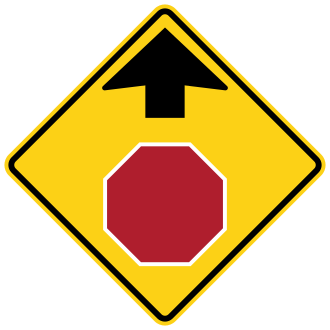
- A stop sign is coming up ahead
- A reduced speed limit is coming up ahead
- A traffic signal is coming up ahead
- A yield sign is coming up ahead
Answer: A — A stop sign is coming up ahead
This sign is the advance warning specifically for an upcoming stop sign.
18. A driver in the right lane sees this sign. What should the driver do?
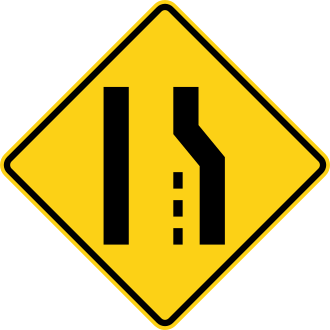
- Watch for traffic merging from the right without changing lanes
- Merge left because the right lane ends ahead
- Continue in the current lane because a new lane is beginning
- Prepare for a lane reduction sign a mile ahead
Answer: B — Merge left because the right lane ends ahead
This sign warns that the lane itself terminates, requiring the driver to merge left rather than simply watch other traffic.
19. What must a driver do before crossing a structure marked with this sign?
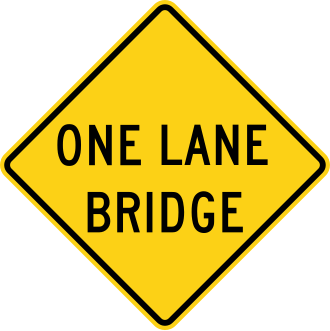
- Slow down because the structure is narrower than the road but two vehicles can still fit
- Stop completely regardless of oncoming traffic
- Make sure no oncoming vehicle is already on it before crossing
- Watch for a low clearance overhead
Answer: C — Make sure no oncoming vehicle is already on it before crossing
This sign marks a bridge with room for only one vehicle at a time, so the driver must confirm nothing is already crossing.
20. What does this sign tell a driver about the road ahead?
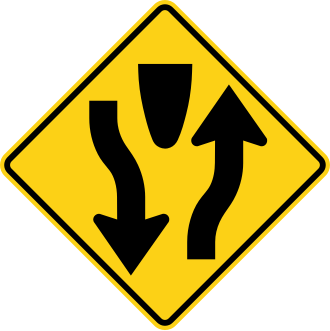
- Two-way traffic is about to resume ahead
- The road is narrowing ahead
- A new lane is beginning that the driver need not merge into
- Opposing traffic will be separated by a median
Answer: D — Opposing traffic will be separated by a median
This sign warns that a median island is about to separate the opposing lanes of traffic.
21. What does this sign warn a driver about?
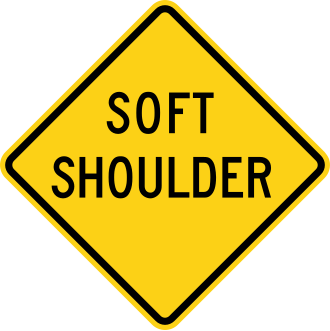
- There is a significant drop from the pavement to the shoulder
- The road surface ahead is rough and poorly maintained
- The dirt beside the pavement is soft, so the driver should not leave the pavement
- The shoulder is reserved only for emergency stopping
Answer: C — The dirt beside the pavement is soft, so the driver should not leave the pavement
This sign warns specifically that the shoulder's soft dirt can cause loss of control if a driver leaves the pavement.
22. What does this sign require of a driver when the light on it is flashing yellow?
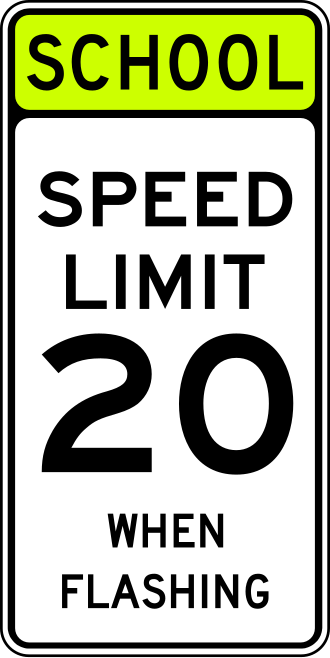
- Wireless devices are prohibited, but normal speed still applies
- Obey the reduced school-zone speed limit shown
- Watch for a train crossing ahead
- Come to a complete stop until all children have crossed
Answer: B — Obey the reduced school-zone speed limit shown
The reduced speed shown on this sign applies specifically while its light is flashing yellow.
23. What does this sign tell a driver is nearby?
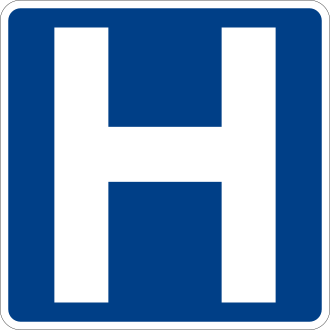
- A hospital
- A rest area with a litter barrel
- An exit-only lane
- A gas station
Answer: A — A hospital
This blue motorist-services sign specifically indicates a nearby hospital.
24. What does this marker identify?
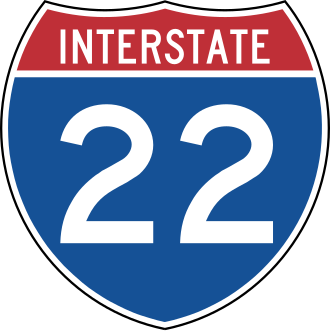
- A state highway
- A U.S. numbered highway
- An Interstate highway
- A business route through a town
Answer: C — An Interstate highway
The red-white-and-blue shield specifically identifies an Interstate highway, distinct from the black-and-white U.S. route shield or the state marker.
25. A driver wants to turn left at an intersection where the signal shows a flashing yellow arrow pointing left. What must the driver do?
- Treat it the same as a flashing red and stop completely
- Come to a complete stop and wait for a green arrow
- May turn left, but must yield to oncoming traffic
- Turn left only if oncoming traffic already has a red light
Answer: C — May turn left, but must yield to oncoming traffic
A flashing yellow arrow permits the left turn but does not stop oncoming traffic, so the driver must yield to it.
26. A driver on a multi-lane road sees a red X illuminated above their travel lane. What does this mean?
- The lane is reserved for buses and carpools only
- Do not drive in that lane
- Prepare to leave the lane because the lane control is about to change
- The lane is open and available to use
Answer: B — Do not drive in that lane
A red X over a lane means that lane is closed to traffic, unlike a steady yellow X which only warns of an upcoming change.
27. A driver on a two-lane, two-way road wants to pass another vehicle, and the line on the driver's side of the center is solid yellow. What should the driver do?
- Not cross it, because passing is prohibited there
- Cross it, since a solid yellow line only restricts oncoming traffic
- Cross it only during daylight hours
- Cross it if the road ahead looks clear for a moment
Answer: A — Not cross it, because passing is prohibited there
A solid yellow line on a driver's own side marks a no-passing zone that must not be crossed to pass.
28. A driver approaching a stretch of highway sees several orange signs and devices. What do they indicate?
- Regulations that carry the force of law
- A general warning of a hazard unrelated to construction
- Motorist services such as gas or food
- Construction and maintenance work
Answer: D — Construction and maintenance work
Orange is the color reserved for construction and maintenance warnings, distinct from general yellow warnings or blue service signs.
29. A driver notices a sign shaped like an eight-sided octagon in the distance, too far away to read. What can the driver already tell about it?
- It is a yield sign
- It is a stop sign
- It is a warning of a hazard ahead
- It is a railroad advance warning
Answer: B — It is a stop sign
The octagon shape is used exclusively for stop signs, so its shape alone identifies it before it can be read.
30. A driver commits a moving violation while driving through a work zone where construction workers are present. What happens to the fine?
- The fine is doubled because workers are present
- The fine stays the same as it would outside a work zone
- The fine is capped at $200 regardless of the violation
- The fine is doubled only if the violation happens at night
Answer: A — The fine is doubled because workers are present
Fines for violations in a work zone double specifically when workers are present.
Take this test interactively
More Texas Driver License practice tests